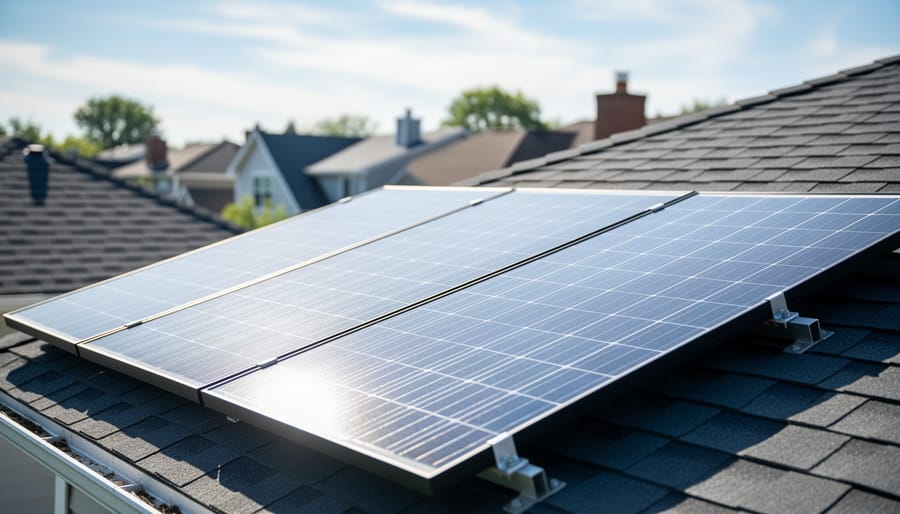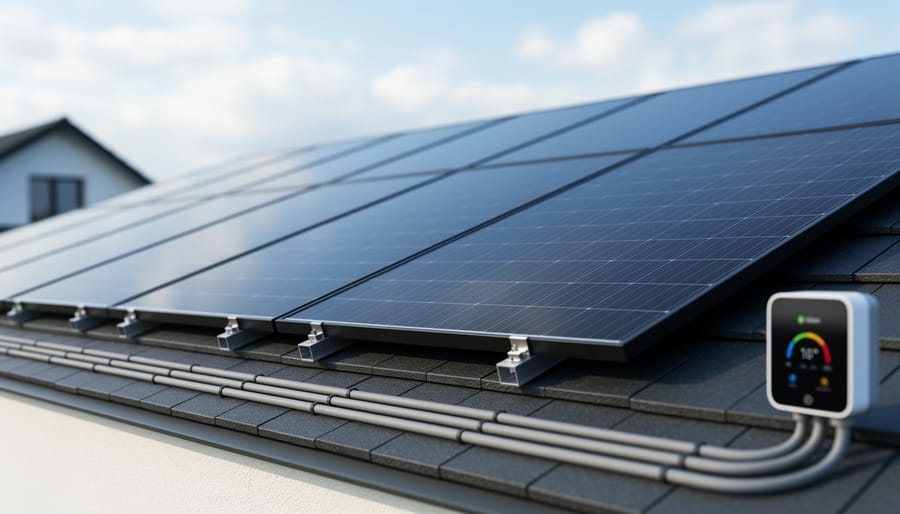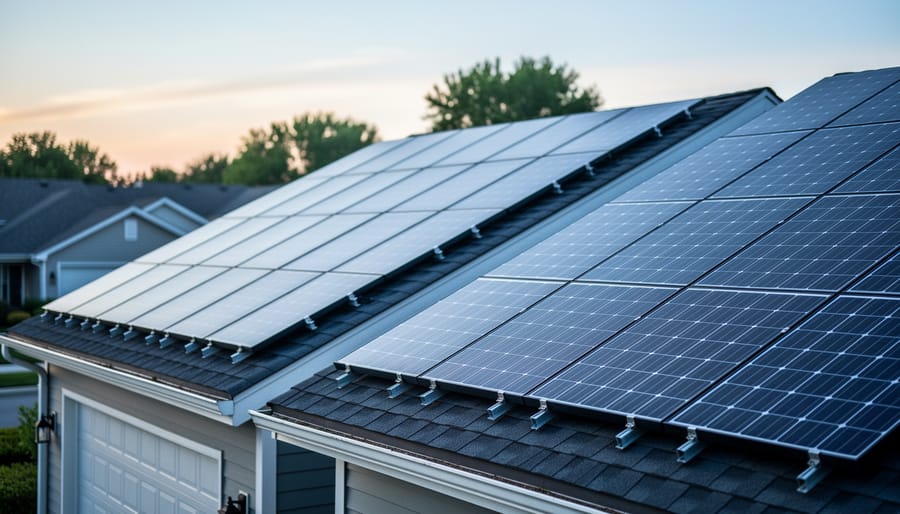
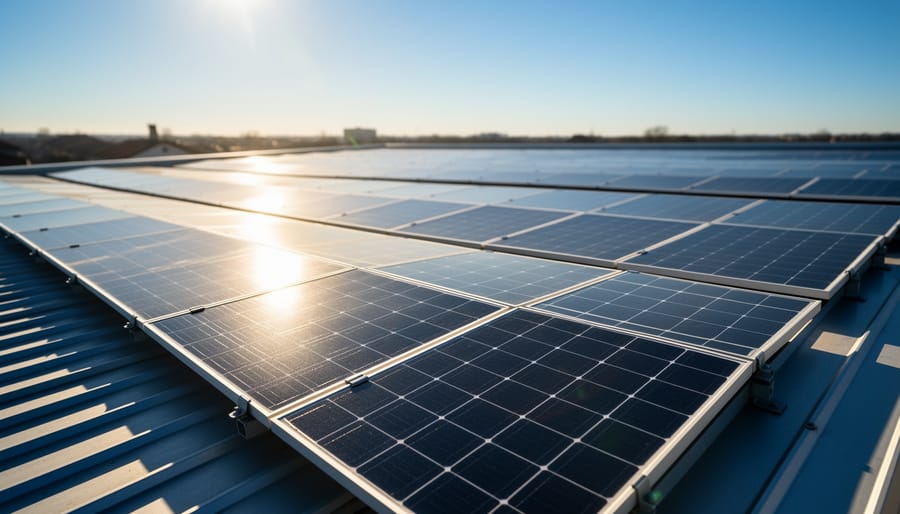
Solar energy works by converting sunlight into electricity through photovoltaic cells in solar panels, which capture photons and release electrons to create an electrical current that can power your home or business. This process, known as the photovoltaic effect, happens silently and cleanly every time the sun shines on your roof.
Understanding how solar panels generate electricity is the first step in deciding whether solar is right for you. The technology has evolved significantly, making solar more efficient and affordable than ever in 2026. Whether you’re looking to reduce your energy bills, increase your home’s value, or lower your carbon footprint, knowing the science behind solar helps you make an informed investment.
This guide breaks down the complete energy conversion process from sunlight to usable electricity. You’ll learn what happens inside a solar cell, how different components work together in a complete system, and which panel types best suit different needs. We’ll walk you through each stage of solar power generation in clear, jargon-free language, giving you the confidence to evaluate solar options for your property. By the end, you’ll understand not just how solar panels create electricity, but how that power integrates with your existing electrical system to keep your lights on and your appliances running.
What Is Solar Energy?
Solar energy is electromagnetic radiation emitted by the sun that reaches Earth and can be harnessed to generate electricity or heat. This radiant energy travels across 93 million miles of space, delivering an enormous amount of power to our planet every single day. In fact, the sun provides more energy to Earth in one hour than the entire world uses in a year.
When we talk about solar energy in practical terms, we’re usually referring to technologies that capture this sunlight and convert it into usable electricity for homes, businesses, and other applications. The most common method uses solar panels equipped with photovoltaic cells that transform sunlight directly into electrical power through a process called the photovoltaic effect.
- Solar Energy
- Radiant light and heat from the sun that can be captured and converted into useful forms of power, primarily electricity or thermal energy.
- Electromagnetic Radiation
- Energy that travels through space in waves, including visible light, ultraviolet light, and infrared radiation from the sun.
- Photovoltaic Effect
- The process by which certain materials generate an electric current when exposed to light, forming the basis of how solar panels work.
- Renewable Energy
- Energy from sources that naturally replenish and won’t run out, such as sunlight, wind, and water.
What makes solar energy particularly valuable is that it’s completely renewable and produces zero emissions during operation. Unlike fossil fuels that deplete over time and release harmful pollutants, the sun will continue providing energy for billions of years. This makes solar power a sustainable solution for meeting our growing energy needs while reducing environmental impact.
How Solar Panels Work: The Complete Process
The Photovoltaic Effect Explained
At the heart of solar panels lies the photovoltaic effect, a process where light creates an electrical voltage across special materials. Here’s what happens when sunlight hits your panels.
Solar cells are made from silicon, a semiconductor that’s been modified to create a built-in electric field. Manufacturers add phosphorus to one layer (creating a negative charge) and boron to another layer (creating a positive charge). This layered structure sets up an internal electrical field right at the junction between the two materials.
When photons from sunlight strike the silicon, they transfer their energy to electrons in the atoms. This energy boost knocks electrons loose from their usual positions, allowing them to move freely. Because of the electric field at the junction, these freed electrons flow in a specific direction, toward the negative layer, while the positively charged “holes” they leave behind move the opposite way.
This movement of electrons creates direct current electricity. Metal conductive plates on the sides of each cell collect these electrons and transfer them to wires, creating usable electrical current. A solar panel diagram shows how multiple cells connect together to increase voltage and power output.
The stronger the sunlight, the more photons hit the cells, and the more electrons get knocked loose. That’s why panels produce more power on bright days than cloudy ones. Each silicon cell typically generates about half a volt, so panels combine 60-72 cells to produce useful voltage levels for your home.
From DC to AC: The Role of Inverters
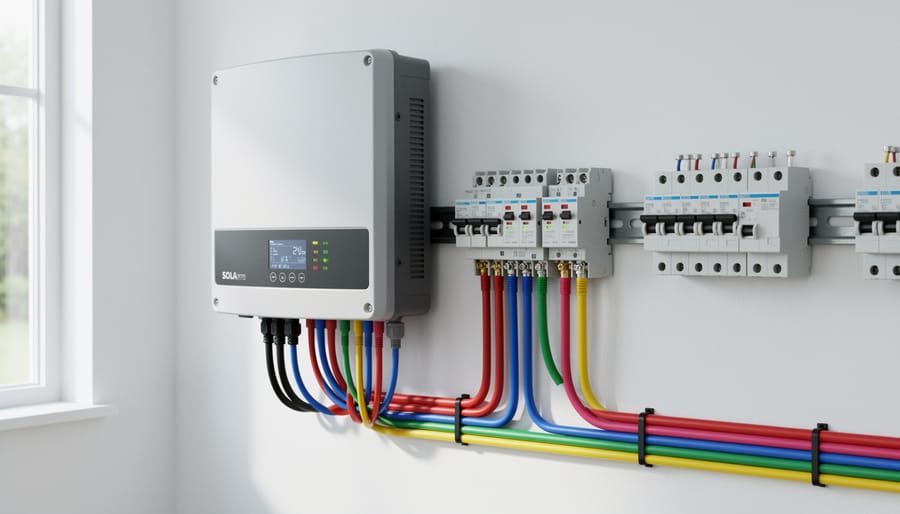
Solar panels generate direct current (DC) electricity, but homes and businesses run on alternating current (AC) power. The inverter bridges this gap by converting the DC to AC electricity that matches your home’s electrical system and appliances.
When DC electricity flows from your solar panels to the inverter, the device rapidly switches the current’s direction back and forth, typically 60 times per second in the US. This creates the oscillating AC power that your refrigerator, lights, and other electronics need to operate. Modern inverters also regulate voltage and ensure the power quality meets grid standards.
Most residential systems use either a single string inverter for the entire array or microinverters attached to individual panels. String inverters are more affordable but process power from all panels together, so shading on one panel affects the whole system. Microinverters optimize each panel independently, improving performance when partial shading occurs.
Your inverter also acts as the system’s brain, monitoring energy production, shutting down during grid outages for safety, and managing the flow of excess power back to the utility grid through programs like Massachusetts net metering.
Grid Connection and Net Metering
When your solar panels generate more electricity than your home uses, that excess power doesn’t go to waste. Instead, it flows back through your meter to the utility grid, where it helps power neighboring homes and businesses. Your meter literally spins backward during these times, creating a credit on your account.
This arrangement, called net metering, functions like a bank for your solar energy. During sunny midday hours when your panels produce peak power but your usage is low, you build up credits. Then, when the sun sets or on cloudy days, you draw electricity from the grid and spend those credits instead of paying full retail rates.
The financial benefits are substantial. In states with favorable net metering policies, homeowners often see their electric bills reduced to just a minimal connection fee. Some utilities credit you at the full retail rate, while others offer slightly lower wholesale rates. A few states even allow you to roll over excess credits month to month or receive annual payments for surplus generation.
Before installing solar, check your utility’s specific net metering rules, as policies vary significantly by location and can directly impact your system’s payback period.
Key Components of a Solar Panel System
Solar Panels and Cells
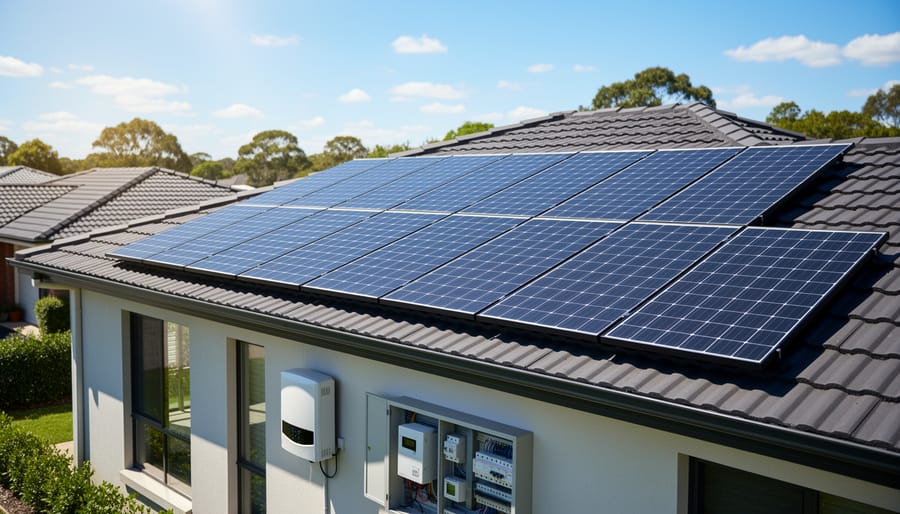
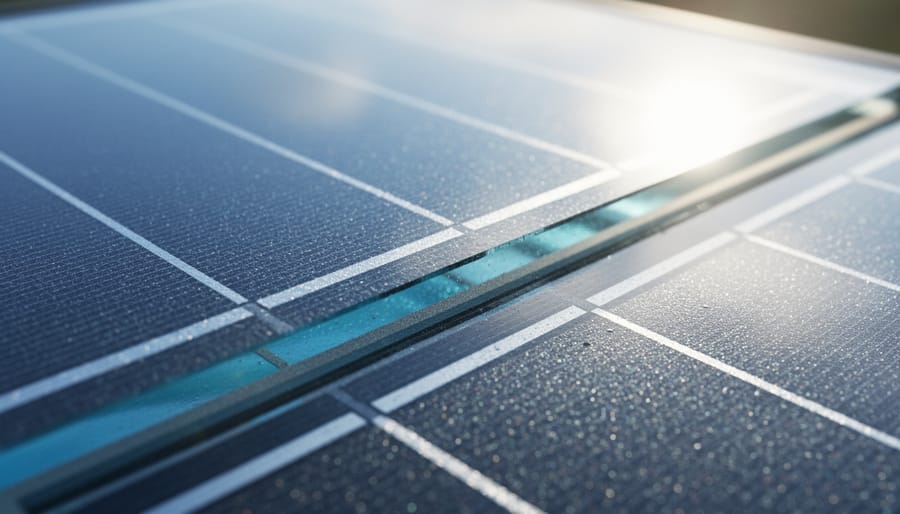
Solar panels are engineered assemblies that house dozens of photovoltaic cells working together to generate electricity. A typical residential panel contains 60 to 72 individual solar cells arranged in a grid pattern, though newer high-efficiency models may pack in even more.
Each cell is a thin wafer of crystalline silicon, usually about six inches square and less than a millimeter thick. These cells are connected in series with thin metal conductors that channel the electricity they produce. The cells themselves appear dark blue or black, depending on the silicon type and anti-reflective coating applied to maximize light absorption.
The entire cell assembly sits beneath a sheet of tempered glass that protects against weather, hail, and debris while allowing sunlight to pass through with minimal loss. This glass typically measures three to four millimeters thick and undergoes special treatment to reduce reflection.
An aluminum frame surrounds the panel’s perimeter, providing structural support and mounting points for installation. Behind the cells, layers of protective backing and encapsulation material shield the electrical components from moisture and physical stress. A junction box on the rear houses the electrical connections where the panel links to your system’s wiring.
Balance of System Components
The supporting equipment that connects your solar panels to your home’s electrical system is just as critical as the panels themselves. These balance of system components ensure safe operation, proper power flow, and visibility into your system’s performance.
Electrical wiring carries power from your panels to the inverter and then throughout your home. Solar installations use specialized UV-resistant cables rated to handle DC voltage from the panels and AC current after inversion. Proper wire sizing prevents energy loss and overheating during transmission.
Disconnect switches serve as safety devices that allow technicians or firefighters to quickly shut down your system during maintenance or emergencies. Most installations include both a DC disconnect near the panels and an AC disconnect near your main electrical panel.
Monitoring systems track your solar production in real time, showing how much energy you’re generating, consuming, and sending back to the grid. Modern monitors connect to smartphone apps, letting you spot performance issues immediately, like a sudden drop that might indicate shading or equipment problems. Many systems also record historical data, helping you understand your energy patterns and verify that your investment is delivering expected returns.
Battery Storage Systems
Battery storage systems are optional additions to solar installations that store excess electricity your panels generate during the day for use when the sun isn’t shining. These systems, typically lithium-ion batteries similar to those in electric vehicles, charge when your panels produce more power than your home needs and discharge when production drops or demand increases.
The primary benefit is energy independence. With battery storage, you can use your own solar power at night or during cloudy periods instead of drawing from the grid. This becomes especially valuable during power outages, when battery systems can keep essential appliances running while grid-connected systems without storage automatically shut down for safety reasons.
Battery capacity is measured in kilowatt-hours, indicating how much energy the system can store. A typical home battery stores 10-15 kWh, enough to power essential loads for several hours or an entire home for a few hours during an outage.
While batteries significantly increase upfront costs, they maximize the value of your solar investment by capturing energy that would otherwise flow back to the grid at lower buyback rates. They’re particularly worthwhile in areas with time-of-use electricity pricing, frequent outages, or limited net metering benefits.
Types of Solar Panel Technology
Monocrystalline Solar Panels
Monocrystalline solar panels are made from single-crystal silicon, giving them their characteristic uniform dark appearance and rounded cell edges. They’re the most efficient type available for residential use, typically converting 18-22% of sunlight into electricity, some premium models reach even higher rates.
This efficiency advantage means you need fewer panels to meet your energy needs, making monocrystalline the best choice for homes with limited roof space. They also perform better in low-light conditions and handle heat more effectively than other panel types.
Most homeowners choose monocrystalline panels for their main solar installations because they offer the best long-term value despite higher upfront costs. The efficiency gains and space savings often justify the premium, especially for properties with south-facing roofs or partial shading issues.
These panels come with warranties of 25-30 years and maintain their performance well over time, typically retaining 85-90% of their original efficiency after two decades.
Polycrystalline Solar Panels
Polycrystalline solar panels are manufactured by melting multiple silicon fragments together and pouring them into square molds, creating a distinctive blue, speckled appearance. This simpler manufacturing process makes them less expensive than monocrystalline panels, though they typically operate at slightly lower efficiency rates of 15-17%.
The main trade-off is space efficiency. Because polycrystalline panels convert sunlight less efficiently, you’ll need more roof area to generate the same amount of power as monocrystalline panels. For homeowners with ample roof space and budget constraints, this difference matters less than the upfront cost savings.
Polycrystalline panels perform similarly to monocrystalline options in moderate climates but can be slightly more affected by high temperatures. They carry comparable 25-year warranties and maintain reliable performance over decades. If your primary concern is minimizing initial investment and you have sufficient installation space, polycrystalline panels offer a proven, cost-effective solution that still delivers substantial energy savings.
Thin-Film and Emerging Technologies
Thin-film solar panels represent an alternative to traditional crystalline silicon technology, using extremely thin layers of photovoltaic material deposited on substrates like glass, plastic, or metal. These panels are lighter, more flexible, and perform better in low-light conditions than their crystalline counterparts. However, they typically convert sunlight to electricity at lower efficiency rates, around 10-13% compared to 15-22% for crystalline panels, which means they require more installation space for the same power output.
The main advantage of thin-film technology lies in specific applications where flexibility matters. Building-integrated photovoltaics, portable solar devices, and curved surfaces benefit from thin-film’s adaptability. Common thin-film materials include cadmium telluride (CdTe) and copper indium gallium selenide (CIGS), each with distinct performance characteristics and manufacturing costs.
Beyond current commercial technologies, researchers are developing next-generation solar solutions. Perovskite solar cells show promise for higher efficiency at lower production costs, though durability remains a challenge. Bifacial panels that capture sunlight from both sides are gaining market traction. Tandem cells combining multiple materials aim to capture different wavelengths of light more effectively.
These emerging technologies haven’t yet displaced traditional silicon panels in residential installations, but they’re expanding solar’s potential applications.
Common Uses for Solar Energy
Residential Solar Applications
Homeowners use solar panels primarily to generate electricity that powers everyday household needs, lights, appliances, heating and cooling systems, and electronics. A typical residential solar installation reduces or eliminates monthly electric bills by offsetting grid consumption during daylight hours.
Beyond electricity generation, many homeowners add solar water heating systems that use collectors to warm water before it reaches standard water heaters. This drastically cuts the energy needed for hot water, which represents a significant portion of home energy use.
Battery storage systems have become increasingly popular for residential applications. They store excess solar energy produced during the day for use after sunset or during power outages. This combination of solar panels and batteries provides genuine energy independence and peace of mind during grid disruptions.
Some homeowners also power outdoor features like pool pumps, landscape lighting, and security systems with dedicated solar setups, reducing their overall energy footprint while maintaining modern conveniences.
Commercial and Industrial Solar
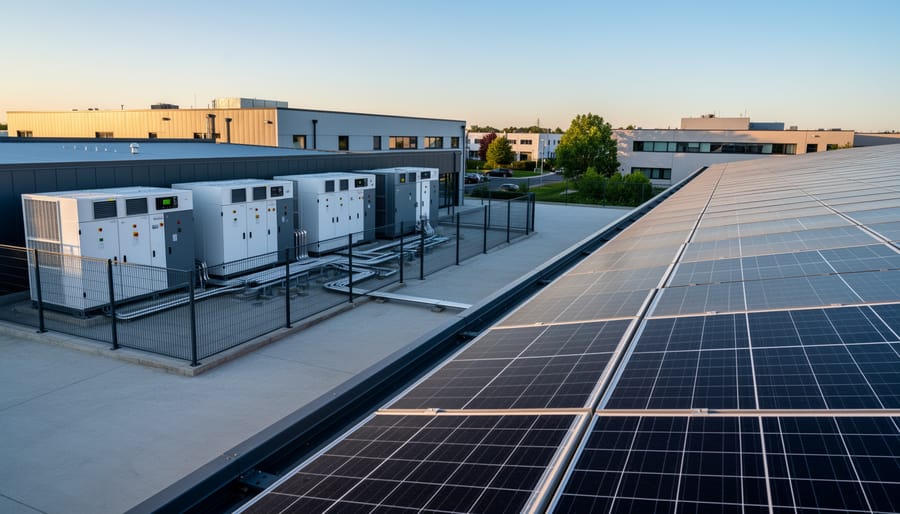
Businesses and manufacturing facilities use solar energy on a much larger scale than residential systems, often installing hundreds or thousands of panels to offset significant electricity costs. Commercial solar installations typically range from 25 kW to several megawatts, mounting panels on warehouse roofs, parking structures, or ground-mounted arrays on available land.
Manufacturing plants particularly benefit from solar because their daytime energy consumption aligns perfectly with peak solar production hours. These facilities can offset expensive demand charges that utilities impose on large electricity users during peak periods.
Commercial systems often incorporate advanced monitoring and energy management software to track production in real-time and optimize usage patterns. Many businesses structure solar projects as power purchase agreements (PPAs) or leases, allowing them to benefit from solar energy without upfront capital costs. The investment tax credit and accelerated depreciation make commercial solar financially attractive, with typical payback periods of 4-7 years depending on electricity rates and system size.
Specialized Solar Uses
Solar energy extends far beyond rooftop residential installations. Off-grid systems power remote cabins, research stations, and rural properties where connecting to the utility grid isn’t practical or cost-effective. These setups typically include robust battery banks to store energy for nighttime use and cloudy periods.
RVs and boats increasingly rely on portable solar panels for independence during travel. Marine-grade panels withstand saltwater exposure and movement, while flexible panels conform to curved RV roofs. These mobile systems power appliances, navigation equipment, and communication devices without running noisy generators.
Agricultural operations use solar arrays to run irrigation pumps, power electric fences, and operate ventilation systems in barns and greenhouses. The technology reduces operating costs while providing reliable power in fields distant from electrical infrastructure.
Community solar programs allow multiple households to share a larger solar installation, perfect for renters, apartment dwellers, or homeowners with shaded roofs who can’t install their own panels.
Factors That Affect Solar Panel Performance
Solar panel output isn’t fixed, it varies based on several environmental and installation factors that determine how efficiently your system converts sunlight into electricity. Understanding these variables helps you set realistic expectations and make informed decisions about panel placement and system design.
Sunlight Exposure and Geographic Location
The amount of direct sunlight your panels receive is the single biggest factor affecting performance. Panels in Arizona naturally produce more energy than identical systems in Seattle because they receive more consistent, intense sunlight throughout the year. Your roof’s orientation matters too: south-facing panels in the Northern Hemisphere capture the most sun, while east or west orientations reduce production by roughly 15-20%. Even within the same city, a home with unobstructed southern exposure will outperform one facing north by a significant margin.
Panel Angle and Tilt
The angle at which panels sit relative to the sun impacts how much light they absorb. The optimal tilt typically matches your latitude, about 30-40 degrees for most U.S. locations. Flat installations on commercial roofs work but produce 10-15% less than properly angled systems. Fixed-tilt mounting is standard for homes, while tracking systems that follow the sun can boost output by 25-35% but add considerable cost and complexity.
Temperature Effects
Contrary to what many assume, solar panels actually perform less efficiently in extreme heat. Most panels lose about 0.5% efficiency for every degree Celsius above 25°C (77°F). A panel rated at 400 watts in lab conditions might only produce 360 watts on a scorching 95°F day. This is why panels in moderate climates with clear skies sometimes outperform those in hotter regions despite receiving similar sunlight hours. Proper ventilation beneath panels and lighter-colored roofing materials can help manage heat buildup.
Shading and Obstructions
Even partial shade from a chimney, tree branch, or neighboring building can dramatically reduce system output. Because panels are wired in series, shading one panel can affect the entire string’s production, like a kink in a garden hose. A shadow covering just 10% of your array might cut total production by 30-40%. Modern microinverters and power optimizers minimize this effect by allowing each panel to operate independently, but eliminating shade remains the best solution. Trim overhanging branches and consider nearby construction or tree growth that might create shade in future years.
Weather and Seasonal Variations
Cloudy days reduce output to 10-25% of full capacity, but panels still generate electricity from diffused sunlight. Rain actually benefits performance by cleaning dust and debris that accumulate on panel surfaces. Snow that slides off quickly has minimal impact, but heavy snow cover halts production entirely until it melts or is cleared. Seasonal changes are predictable: summer months produce peak output due to longer days and higher sun angles, while winter production drops by 40-60% in northern climates despite panels actually being more efficient in cooler temperatures.
Frequently Asked Questions About Solar Energy
Do solar panels work on cloudy days?
Yes, solar panels still generate electricity on cloudy days, though at reduced efficiency, typically producing 10 to 25 percent of their normal output. Modern panels are designed to capture diffused sunlight that penetrates cloud cover.
What happens at night when there’s no sunlight?
Solar panels don’t produce electricity at night, but grid-connected systems draw power from the utility grid during nighttime hours. If you have battery storage, your system can use stored energy collected during daylight hours instead.
How long do solar panels last?
Quality solar panels typically last 25 to 30 years or longer, with most manufacturers offering warranties of 25 years. Performance degrades slowly over time, usually losing less than 1 percent efficiency per year.
Do solar panels require maintenance?
Solar panels need minimal maintenance beyond occasional cleaning to remove dirt, leaves, or snow that might block sunlight. Annual inspections of electrical connections and inverters help ensure optimal performance, but panels have no moving parts to wear out.
Can solar panels power my entire home?
A properly sized solar system can cover 100 percent of your electricity needs, though this depends on your energy consumption, available roof space, and local sunlight conditions. Most homeowners work with installers to design systems that match their specific usage patterns.
Beyond these basics, many homeowners wonder about permits and certificates required for solar installations. Requirements vary by location, so if you’re in California and asking whether do I need one? checking local regulations ensures your system meets all compliance standards.
Weather resilience is another common concern. Solar panels are engineered to withstand hail, high winds, and heavy snow loads, with most rated for wind speeds exceeding 140 miles per hour. The tempered glass covering protects cells from impact damage, and mounting systems are designed to handle significant weight without compromising roof integrity. Extreme heat actually reduces panel efficiency slightly, which is why panels in very hot climates may produce less power than the same panels in cooler, sunny locations.
Types or components
A complete solar energy system consists of several essential components working together to capture sunlight and deliver usable electricity to your home or business. At the heart of the system are the solar panels themselves, which contain photovoltaic cells that convert sunlight into direct current electricity. These panels connect to an inverter, which transforms DC power into the alternating current your appliances require.
The mounting system secures panels to your roof or ground, positioned at the optimal angle for maximum sun exposure. Wiring and electrical components create pathways for electricity to flow safely through the system. A disconnect switch allows you to shut down the system for maintenance or emergencies.
Many installations include a monitoring system that tracks energy production in real-time, letting you see exactly how much power you’re generating. If you want energy storage for nighttime use or backup power during outages, battery systems can store excess electricity generated during the day. Grid-tied systems also require a bi-directional meter that measures both the electricity you consume and the excess power you send back to the utility grid.
Understanding how solar energy works empowers you to make informed decisions about renewable power for your home or business. The process, from sunlight hitting photovoltaic cells to usable electricity flowing through your property, is more straightforward than many people realize. Solar panels capture photons, create an electric field, and generate clean energy that reduces your utility bills and carbon footprint.
Whether you’re considering rooftop panels, ground-mounted systems, or battery storage, solar technology has become more efficient and affordable than ever in 2026. The right system depends on your location, energy needs, roof characteristics, and budget.
Ready to explore solar options tailored to your situation? Ask Solar connects you with experienced local installers who understand your area’s sunlight patterns, incentives, and installation requirements. Our network of vetted professionals can assess your property, answer your specific questions, and provide transparent quotes based on your actual energy usage.
Getting started is simple. Request free quotes from qualified solar providers in your area and discover how much you could save while contributing to a cleaner energy future. The switch to solar begins with understanding the possibilities for your unique situation.