
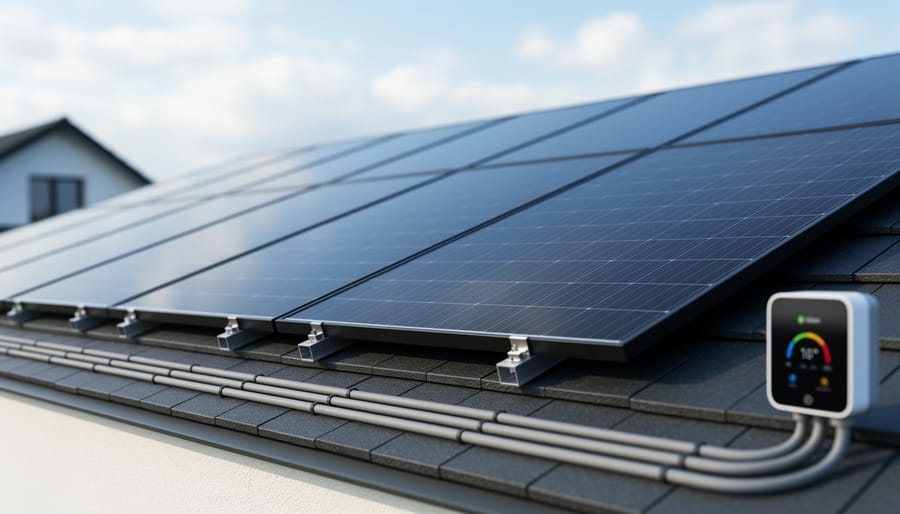
Understanding how solar energy flows from your rooftop to your home’s electrical system starts with a clear visual roadmap. Solar energy diagrams transform abstract concepts into concrete knowledge, showing you exactly how photons become usable electricity and where every wire connects.
Most homeowners approach solar installation with the same question: What am I actually buying? A quality diagram reveals the complete picture. You’ll see how solar panels capture sunlight, how inverters convert DC power to AC electricity, and how your system connects to the utility grid or battery storage. These visuals aren’t just educational tools. They’re your blueprint for evaluating installer quotes, understanding what equipment goes where, and catching potential issues before installation begins.
The right diagram does more than label parts. It shows energy flow with directional arrows, clarifies safety disconnects required by code, and illustrates monitoring systems that track your production. Whether you’re comparing single-line electrical diagrams from different installers or studying a detailed wiring schematic before signing a contract, these visuals give you the confidence to ask smarter questions.
Think of solar diagrams as your translation guide. They bridge the gap between technical jargon and practical understanding, helping you grasp why certain components matter and how they work together as a system. For 2026 installations, diagrams increasingly include smart home integration points and EV charging connections, reflecting how solar fits into your broader energy strategy. When you understand the layout, you make better decisions about system size, component quality, and long-term value.
What Is a Solar Energy Diagram?
A solar energy diagram is the visual blueprint that transforms abstract solar panel science into a concrete installation plan. These diagrams serve dual roles: they educate consumers about how energy flows through their system, and they provide the technical documentation installers, utilities, and building inspectors need to approve and complete your project.
Think of solar energy diagrams as a universal language. The same drawing that helps you understand where your panels connect and how electricity reaches your home also shows the authority having jurisdiction exactly how the system meets safety codes, demonstrates to the utility company where metering will occur, and guides installers through proper wiring sequences. Everyone reviewing your solar project sees the same system the same way through these standardized visuals.
For homeowners, simple flow diagrams illustrate the journey from sunlight hitting panels to usable power in your outlets. For professionals, detailed single-line diagrams and interconnection schematics become the critical documents that turn a signed contract into an approved installation. A clear single-line diagram keeps your permit application moving smoothly, while a properly formatted interconnection diagram prevents delays with utility approvals.
These diagrams label every component in your system, from solar panels and inverters to disconnect switches and circuit breakers, using standardized symbols and formats required by the National Electrical Code. Whether you are trying to understand a quote from an installer or an inspector is verifying code compliance, the solar energy diagram serves as the authoritative reference that makes the invisible visible and the complex comprehensible.

Understanding Solar Panel Anatomy: Key Components in Every Diagram
What Do the Solar Panels Actually Do?
Solar panels are the visible face of any system, but what you see on the roof is actually doing something remarkably specific: converting sunlight into direct current (DC) electricity through photovoltaic cells. Each panel contains dozens of these silicon cells arranged in a grid. When photons from sunlight strike the cell, they knock electrons loose, creating an electrical current that flows in one direction.
In a solar energy diagram, you’ll see individual panels labeled as modules. These modules don’t work alone. Installers wire them together in series to form strings, this increases voltage while maintaining the same current. Think of it like connecting batteries end-to-end. A typical residential string might include 8 to 12 panels, though the exact number depends on your inverter’s voltage window and roof layout.
Multiple strings combine to form an array, which is the complete collection of panels generating power for your home. The diagram shows these connections clearly because string configuration affects everything downstream, from wire sizing to inverter selection to system performance. It’s why array wiring is often the first element installers map out when designing your system.
Why Is the Inverter Central to Every Diagram?
The inverter sits at the heart of every solar energy diagram because it performs the essential transformation that makes solar electricity usable in your home. Solar panels produce direct current (DC) electricity, but your appliances, lights, and electronics run on alternating current (AC). Solar inverters convert DC to AC making them the critical bridge between energy generation and consumption.
In system schematics, you’ll see inverters positioned between the solar array and your main electrical panel. String inverters, the most common type, appear as a single box handling all panels’ output, typically mounted on an exterior wall or in a garage. Microinverters attach directly to each panel on the roof, so diagrams show multiple small units rather than one central device. Hybrid inverters add battery connections, appearing in diagrams with additional DC inputs for energy storage.
The inverter’s placement affects everything downstream: wire sizing, disconnect requirements, and how the system integrates with your electrical panel. Quality diagrams clearly label inverter specifications, input voltage range, output capacity, and efficiency ratings, because these determine system performance and code compliance. When reviewing quotes, check that the inverter type matches your roof layout and energy goals.

How Does Energy Flow Through the System?
The energy journey starts when photons strike the photovoltaic cells in your solar panels, knocking electrons loose and generating direct current electricity. This DC power flows through the array wiring, where individual panels connect to form strings, then travels down the DC homerun conduit to your inverter. Here’s where the crucial conversion happens: the inverter transforms that DC electricity into alternating current that matches your home’s electrical system.
From the inverter, AC power routes through your main electrical panel. At this point, your home draws whatever electricity it needs. If your panels are producing more energy than you’re using at that moment, the excess flows backward through your utility meter and onto the grid, that’s when you see your meter literally spin backward in many cases, earning you credits. When the sun sets or your usage exceeds production, the flow reverses: you draw power from the grid just like before you had solar.
This bidirectional flow is what makes grid-tied solar systems so practical. Your solar diagram should clearly trace this entire path, showing disconnect switches at key points for safety and indicating where power can flow in either direction.
What Safety and Control Components Must Be Shown?
Every compliant solar energy diagram must show several critical safety and control components that protect both people and equipment. Disconnect switches appear at key points, typically a DC disconnect between the array and inverter, plus an AC disconnect between the inverter and your main panel, allowing the system to be safely de-energized for maintenance or emergencies. Circuit breakers protect against overcurrent conditions, with proper sizing shown for both the solar AC output breaker in your main panel and any backfeed breaker connections.
Rapid shutdown devices have become mandatory safety features in recent code cycles, enabling the solar array to quickly de-energize during firefighter response or other emergencies. Your diagram should clearly indicate rapid shutdown initiation points and the protected zones they create. Grounding and bonding elements form another essential layer: equipment grounding conductors connect all metal components to earth, while bonding jumpers ensure continuous electrical paths between conductive surfaces. These grounding paths, along with grounding electrode connections, must be clearly marked on any compliant diagram.
NEC 690 requirements govern how these components appear in solar installations. Before accepting any system design, confirm which code cycle your local authority has adopted, as requirements have evolved significantly between recent NEC editions.
Types of Solar Energy Diagrams You’ll Encounter
Educational Flow Diagrams for Homeowners
Educational flow diagrams strip away technical complexity to show homeowners what actually happens when sunlight hits their roof. These consumer-friendly visuals use simple arrows and clearly labeled boxes to illustrate the journey from solar panel to light switch, panels capture sunlight, the inverter converts it to usable power, and electricity flows to your appliances or back to the grid. Unlike the technical single-line diagrams installers submit for permits, educational diagrams focus on relationships rather than wire gauges and breaker ratings. They answer the fundamental question most homeowners ask: “How does this thing actually work?” A quality installer will walk you through this type of diagram during your consultation, pointing to each component and explaining its purpose before diving into system specifications or pricing details.
Single-Line Diagrams for Permit Applications
When you submit a solar installation for permitting, the authority having jurisdiction (AHJ) requires a single-line diagram, sometimes called a one-line or SLD. This standardized schematic shows your entire electrical system condensed into a clear, linear format that plan reviewers can evaluate quickly. Unlike a consumer-friendly flow diagram, a single-line diagram uses industry symbols and conventions to depict every major component, connection point, wire size, voltage level, and protective device rating.
A proper single-line diagram labels the array specifications (module count, string configuration, total DC wattage), the inverter model and rating, all disconnect switches, overcurrent protection devices with amperage ratings, the AC connection point to your main service panel, and grounding paths. It shows the electrical path in a straight-line format rather than physically accurate routing, which lets inspectors verify code compliance at a glance.
This document is what turns a sold job into an approved install. The same diagram ensures every reviewer, plan checker, electrical inspector, and installation crew, sees the system identically. A clear single-line diagram keeps your permit set consistent and moving through approval without rounds of corrections. Most AHJ rejections stem from incomplete equipment ratings, missing disconnect locations, or unclear wire sizing on the SLD, so accuracy here directly affects your timeline.
Interconnection Diagrams for Utility Approval
Your utility company requires its own specialized diagram before they’ll approve your system to connect to the grid. This interconnection diagram focuses specifically on the point where your solar system meets the utility’s infrastructure, showing metering equipment, disconnect switch locations, and exactly how power flows between your home and the grid.
Unlike permit diagrams that detail every wire and breaker, interconnection diagrams zero in on what the utility needs to verify: that your system won’t compromise grid safety or interfere with their equipment. You’ll see clear labels for the production meter (which tracks how much solar energy you generate), the consumption meter (your existing usage meter), and the external disconnect switch that allows utility workers to isolate your system during maintenance or emergencies.
The diagram also indicates whether you’re using net metering, where excess power flows back to the grid, or if your system includes battery storage that changes how energy is managed. Each utility has specific requirements for diagram format and detail level, so installers typically customize these drawings to match local utility standards. A clean interconnection diagram keeps the utility application moving, preventing delays in your final approval to turn on your system and start generating solar power.
Reading a Solar Panel Wiring Diagram: A Step-by-Step Q&A

How Are Solar Panels Wired Together?
Array wiring is how modules connect to each other and form strings, the foundation of your solar system’s electrical design. Most residential diagrams show panels wired in series, meaning the positive lead of one module connects to the negative lead of the next, creating a chain that adds voltage while keeping amperage constant. A typical string might combine 10 to 14 panels, depending on inverter input specs and roof layout.
Some systems use parallel connections instead, joining multiple strings to increase current while voltage stays the same. This configuration shows up when shade, roof complexity, or module mismatch requires balancing output. You’ll also see series-parallel hybrid designs on larger arrays, where several series strings run in parallel to the inverter.
Wire sizing matters more than homeowners realize. Diagrams specify gauge based on string current, circuit length, and voltage drop calculations, undersized wire creates losses and code violations. Quality installers mark conductor size clearly, typically 10 AWG or 12 AWG for residential arrays, with routing details showing how strings homerun from roof to combiner or directly to the inverter. These wiring choices directly affect system efficiency and determine whether your diagram passes permit review on the first submission.
What Is the DC Homerun and Why Does It Matter?
The DC homerun is the wiring path that carries electricity from your roof array down to the inverter, typically running through conduit along the exterior or interior of your building. This section of the system operates at high DC voltage, often 300 to 600 volts depending on your array configuration, which makes proper wire sizing and protection critical for both safety and performance.
Voltage drop is the key consideration here. If the DC homerun is too long or the wire gauge too small, you’ll lose power as heat before the electricity even reaches the inverter. Most installers target less than 2% voltage drop on this run, which means larger wire sizes for longer distances. A quality diagram will specify the exact wire gauge, conduit type, and run length so inspectors can verify the system meets NEC 690 requirements.
Conduit requirements vary by location and whether the run is exposed or concealed, but every compliant diagram shows the conduit path, material type (EMT, PVC, rigid), and size. This isn’t just about passing inspection, poorly routed or undersized conduit creates installation headaches and potential failure points. When reviewing quotes, check that the DC homerun details match your actual building layout and distance from roof to inverter location.
How Does AC Wiring Connect Your System to Your Home?
After the inverter converts DC to AC, a dedicated AC circuit carries that power to your home’s main electrical panel. This AC output wiring typically connects at a backfed breaker, meaning the solar-generated electricity feeds backward into the panel to supply your loads and send any excess to the grid. The breaker must be sized correctly, usually matching the inverter’s maximum continuous output current with appropriate safety margin, and positioned according to the 120% rule, which limits the combined rating of the solar breaker and main breaker to prevent overloading the panel’s bus bar.
Your diagram should clearly show the AC disconnect between the inverter and the panel, the wire gauge and conduit type, and the exact breaker location. Installers often label the line-side versus load-side connection, especially in cases where the utility requires a separate production meter. This wiring path represents the final step in making solar power usable in your home, so proper labeling here confirms your system meets local electrical code and utility interconnection standards.
What Grounding and Protection Elements Should You See?
Proper grounding and protection elements are non-negotiable in code-compliant solar diagrams. You should see a dedicated grounding conductor path running from the array frame back to the main service panel, ensuring all metallic components are bonded together. This includes module frames, rails, inverter chassis, and conduit systems. Diagrams must clearly show equipment grounding conductors sized according to NEC requirements, typically matching or exceeding the ampacity of circuit conductors.
Overcurrent protection devices appear at critical points: DC combiners often have fuses protecting each string, while breakers on both the AC and DC sides prevent wire overheating. Look for rapid shutdown initiation devices, now mandatory under recent code cycles, which allow first responders to safely de-energize the array. A compliant diagram labels each protective device with its rating and type, shows bonding jumpers at all connection points, and indicates grounding electrode conductor paths. Missing or undersized protection is a red flag that delays permits and creates safety risks during installation and operation.
Why Accurate Diagrams Matter: From Approval to Installation

Getting Permits Approved Faster
A clean single-line diagram is your fastest path through permit review. When plan examiners can immediately see equipment ratings, wire sizing, and protection devices without flipping between pages or squinting at unclear labels, they approve faster. The diagram shows every reviewer, your AHJ, the utility, the installation crew, and the final inspector, the same system the same way, eliminating confusion that triggers revision requests.
Consistency matters. If your single-line diagram lists a 10 kW inverter but your equipment schedule shows 9.6 kW, expect a correction notice. Plan reviewers flag mismatches between the diagram and supporting documents more than any other issue. A clear diagram with accurate wire gauges, breaker ratings, and component specifications that match your datasheets keeps the permit set moving instead of bouncing back to your desk for revisions.
Ensuring Safe, Code-Compliant Installations
A properly drafted solar diagram isn’t just documentation, it’s your proof that the system meets the National Electrical Code. The 2023 NEC, particularly Article 690 covering solar installations, sets the baseline for safe design, but here’s the catch: your local authority having jurisdiction might still be enforcing an earlier code cycle. Before you approve any diagram, confirm which NEC edition your AHJ has adopted. A compliant diagram shows grounding conductor paths, proper overcurrent protection sizing, rapid shutdown provisions, and disconnect switch locations exactly where code requires them. When installers skip these details or use outdated standards, inspectors flag the plans, permits stall, and your installation date gets pushed back. Quality solar companies build their diagrams to current code from the start, labeling every component so that inspectors, utility reviewers, and installation crews all see the same compliant system.
Avoiding Common Diagram Mistakes That Delay Projects
Plan reviewers flag solar diagrams for several predictable reasons, most of them preventable with attention to detail. Missing equipment ratings top the list, your diagram must show inverter output current, panel specifications, and wire ampacities, not just equipment model numbers. Reviewers also reject diagrams that omit required disconnects or show them in non-compliant locations. Another common mistake is inconsistent labeling between the single-line diagram and the site plan; if your roof layout shows 18 panels but your electrical diagram shows 20, expect a correction notice.
Incomplete grounding paths cause frequent rejections too. Your diagram needs to clearly trace the equipment grounding conductor from the array through the inverter to the main service panel. Wire sizing calculations that don’t account for temperature correction factors or conduit fill will get called out. The simplest prevention is to confirm your AHJ’s adopted code cycle before submission and double-check that every component shown has a corresponding label with its rating, every protective device has a size, and every line has a purpose that matches NEC requirements.
Using Solar Diagrams to Compare Quotes and Make Informed Decisions
What to Request from Solar Installers
When you’re evaluating solar installers, don’t wait until contract signing to see system diagrams. Ask for preliminary design drawings upfront, during the quoting phase. A reputable installer should provide at least a basic single-line diagram showing how your proposed system connects together, panels, inverter, disconnect switches, and connection to your electrical panel.
You won’t get permit-ready detail at this stage, but you should see the major components labeled, wire paths indicated, and inverter location marked. Request a simple site plan showing panel placement on your roof or property. If an installer balks at providing any visual documentation before you commit, that’s a warning sign.
Expect clarity, not complexity. The diagram should show every reviewer the same system the same way, making it easy to understand what you’re actually buying. Ask how many panels form each string, where the inverter will mount, and whether rapid shutdown devices are included. A quality installer welcomes these questions and uses diagrams to answer them. If the response is vague or dismissive, keep shopping.
Red Flags and Green Flags in Solar System Diagrams
When you receive diagrams from installers, a few visual cues separate professional design from rushed work. Green flags signal attention to detail and compliance. Look for complete labeling of every major component, array voltage, inverter rating, breaker sizes, disconnect locations. Quality diagrams show proper wire sizing with AWG gauge numbers and conduit types clearly marked. You should see dedicated grounding and bonding connections called out, not just assumed. String configurations that match manufacturer specs and respect voltage limits demonstrate careful engineering rather than generic templates.
Red flags often appear as missing details that create problems during plan review. Incomplete equipment labels, especially missing inverter model numbers or panel specifications, force the AHJ to request revisions, delaying your permit. Watch for diagrams that skip required disconnects or omit rapid shutdown components, which are non-negotiable under current code. Generic “TBD” placeholders for wire sizing or breaker ratings suggest the installer hasn’t finalized the design. Diagrams showing oversized arrays relative to inverter capacity without explanation may indicate poor system optimization or a lack of understanding about clipping losses.
If a proposed diagram lacks clear grounding paths or shows unclear AC connection points to your main panel, ask for clarification before signing. The most common reason solar diagrams get flagged is these preventable omissions. A complete, detailed diagram reflects an installer who understands that this document serves everyone from the permit reviewer to the crew on your roof, and that transparency matters.
Solar energy diagrams do more than illustrate how panels convert sunlight into electricity. They transform complex technology into visual clarity, giving you the confidence to evaluate proposals, ask informed questions, and verify that what you’re buying matches what gets installed. When you understand the flow from photovoltaic cells through inverters to your electrical panel, you shift from passive buyer to informed decision-maker.
Every quality installer should provide clear diagrams before you sign a contract. These aren’t just nice-to-have marketing materials, they’re the documents that show authorities, utilities, and inspectors the same system the same way, ensuring everyone agrees on what you’re getting. A transparent diagram reveals thoughtful design choices, proper equipment sizing for your energy requirement and code-compliant safety provisions.
When comparing quotes, request detailed single-line diagrams and interconnection schematics from each bidder. Look for clear labeling, appropriate equipment ratings, and straightforward energy paths. If an installer hesitates to share this level of detail, that’s your signal to keep looking.
Ask Solar connects you with the best solar installers in your area, professionals who prioritize transparency and provide well-documented system designs. These qualified partners understand that education empowers better decisions, and they’ll walk you through every line and component. With the federal tax credit and local incentives available, there’s never been a better time to invest in solar, armed with the diagram knowledge to do it right.