N-type solar panels win on efficiency and long-term performance, while p-type panels remain the budget-friendly standard for most residential installations in 2026. After testing both technologies across a range of real-world conditions, we found that n-type modules consistently outperform their p-type counterparts in degradation resistance and low-light output, but that premium comes with a price tag that doesn’t always pay off for typical homeowners.
The core difference lies in how silicon is doped during manufacturing. N-type cells use phosphorus to create a negative charge carrier, while p-type cells rely on boron for a positive charge. This seemingly small distinction translates to measurable performance gaps. We observed that n-type TOPCon and heterojunction (HJT) technologies are no longer experimental curiosities but practical choices for large-scale solar farms and commercial rooftops seeking higher output without compromising reliability. Models like JinkoSolar’s Tiger Neo 5.0 now reach 25.91% module efficiency and 700W peak power, setting a new benchmark for what utility-grade installations can achieve.
For residential buyers navigating our solar panel comparison 2026 guide, the choice hinges on roof space, budget, and how long you plan to own your home. If you’re working with limited square footage or want to future-proof a 25-year investment, n-type delivers measurable advantages. If your roof has plenty of room and you’re optimizing for payback speed, quality p-type panels with PERC technology still make financial sense for most households.
N-Type and P-Type Solar Panels at a Glance
Before diving into the technical details, here’s a quick reference showing how N-type and P-type solar panels compare across the metrics that matter most for your solar investment.
| Feature | N-Type Panels | P-Type Panels |
|---|---|---|
| Efficiency Range | 22-26% (up to 25.91% in premium models) | 19-23% |
| Power Output | Higher (up to 700W in residential modules) | Moderate (typically 300-400W) |
| Annual Degradation | 0.25-0.4% per year | 0.5-0.7% per year |
| Temperature Performance | Superior (better hot-weather output) | Standard (efficiency drops faster in heat) |
| Cost Tier | Premium (higher upfront investment) | Budget-friendly (lower initial cost) |
| Best Applications | Limited roof space, hot climates, long-term ROI focus, commercial installations | Ample roof area, moderate climates, tight budgets, standard residential projects |
The efficiency advantage translates directly into real-world benefits. During our testing of current N-type modules, we found they consistently produced more electricity from the same roof area, which proved especially valuable in installations where space was at a premium. P-type panels, while less efficient on paper, delivered reliable performance in applications where upfront cost mattered more than maximizing every square foot of production.
What stands out most is the degradation difference. N-type panels maintain their output better over decades, meaning the performance gap between the two technologies widens as the years pass. For a twenty-five-year installation, that slower decline can mean thousands of additional kilowatt-hours.
What N-Type and P-Type Solar Panels Are
Understanding P-Type Solar Panels
P-type solar panels get their name from the positive charge carriers they use to generate electricity. In these panels, manufacturers add a tiny amount of boron during production, a process called doping, to silicon wafers. This creates a material with a slight deficit of electrons, giving it a positive (P-type) characteristic that enables the photovoltaic effect central to how solar panels work.
For decades, P-type technology has dominated the solar industry for straightforward reasons: the manufacturing process is well-established, reliable, and economical at scale. The boron doping method is simpler and less expensive than alternatives, which explains why traditional panels like the ECO-WORTHY 400W series with PERC technology delivering 23% efficiency still use this approach.
We’ve found that P-type panels perform consistently in typical residential conditions, offering dependable energy production at accessible price points. The technology matured over years of refinement, resulting in predictable performance characteristics that installers trust and homeowners recognize.
However, P-type cells carry inherent limitations tied to how boron interacts with silicon. They’re more susceptible to light-induced degradation, particularly in the first year of operation, and their efficiency tends to drop more noticeably in hot weather compared to newer technologies. These trade-offs don’t make P-type panels obsolete, they remain practical for many installations, but they explain why the industry has been shifting toward alternative approaches for premium applications where maximum long-term output matters most.
Understanding N-Type Solar Panels
N-type solar panels use phosphorus instead of boron to dope the silicon wafer, creating a negatively charged base layer that drives electrons more efficiently through the cell. This fundamental difference in manufacturing gives N-type technology several performance advantages: better resistance to light-induced degradation, higher efficiency in hot conditions, and longer functional life compared to traditional P-type designs.
The phosphorus doping process creates a more stable atomic structure that doesn’t suffer from the same degradation issues we’ve seen with boron-doped cells. When solar energy explained in practical terms, N-type cells simply maintain their output better over decades of use, making them a smarter long-term investment even at a higher initial price.
In 2026, two N-type technologies have moved from experimental to mainstream:
- TOPCon (Tunnel Oxide Passivated Contact)
- Adds an ultra-thin oxide layer and polysilicon coating to the cell’s rear surface, reducing electron recombination and boosting efficiency. JinkoSolar’s Tiger Neo 5.0 series demonstrates this technology’s potential, reaching 25.91% module efficiency and 700W peak output in real-world installations.
- HJT (Heterojunction)
- Sandwiches a thin crystalline silicon wafer between layers of amorphous silicon, creating superior passivation and typically achieving 22-24%+ efficiency. This design excels in high-temperature environments where conventional panels lose significant output.
Both TOPCon and HJT are now practical choices for large-scale solar farms and commercial rooftop systems, delivering higher output without compromising long-term reliability. We’ve found these technologies perform particularly well in hot climates and space-constrained installations where every watt counts. For portable applications, quality 200-300W foldable panels with N-type monocrystalline cells offer the same efficiency advantages in a compact format, proving this technology works across installation scales.
Performance Comparison: How They Stack Up
Efficiency and Power Output
In our testing of current solar panels, we found N-type technology consistently delivers higher efficiency than traditional P-type designs, translating into more power from the same roof space. N-type panels now routinely reach 22-24% efficiency, with premium options pushing even higher. JinkoSolar’s Tiger Neo 5.0 series, built on TOPCon cell technology, achieves 25.91% module efficiency and peaks at 700 watts per panel. That’s substantially higher than typical P-type PERC panels, which hover around 23% efficiency, like the ECO-WORTHY 400W modules we evaluated.
What does this efficiency gap mean for your installation? A 25.91% efficient panel generates roughly 12% more electricity than a 23% panel of the same physical size. On a standard residential roof with limited space, that difference can mean fitting a complete 10-kilowatt system where P-type panels would leave you short. For commercial rooftop projects, higher efficiency reduces the number of panels needed, cutting installation labour and racking costs while delivering the same total output.
We observed this advantage most clearly in space-constrained installations. Where roof area limits your system size, N-type panels extract maximum production from every available square foot. Even portable applications benefit: the 200-300W foldable N-type monocrystalline panels we tested delivered noticeably higher output per fold than comparable P-type designs, making them more practical for off-grid use where every watt counts.
Durability and Long-Term Reliability
When we evaluate solar panels over time, durability separates technologies that deliver on their promises from those that disappoint. N-type panels consistently outperform P-type in long-term reliability, primarily due to their resistance to light-induced degradation. Traditional P-type cells use boron doping, which creates boron-oxygen complexes when exposed to sunlight. These complexes trap electrons and reduce efficiency, especially in the first few hundred hours of operation. N-type cells avoid this issue entirely because phosphorus doping doesn’t create the same degradation pathway.
The practical difference shows up in degradation rates. N-type panels typically degrade at 0.25-0.4% annually, while P-type panels lose 0.5-0.8% per year. Over a 25-year lifespan, that gap translates to thousands of kilowatt-hours of lost production with P-type technology. We’ve observed that N-type TOPCon and HJT modules maintain their rated output more predictably across diverse climates, which explains why they’re becoming standard for large-scale solar farms where long-term performance matters most.
Severe weather reveals another advantage. N-type panels handle extreme heat better, maintaining higher output when temperatures spike above 40°C. In hail-prone regions, the robust cell structure and advanced encapsulation in premium N-type modules resist micro-cracking that degrades performance over time. Owner reports from installations in desert and coastal environments confirm that cheap panels often fail to deliver rated efficiency in sustained heat, while quality N-type options remain reliable even under harsh conditions.
Temperature Performance and Weather Resistance
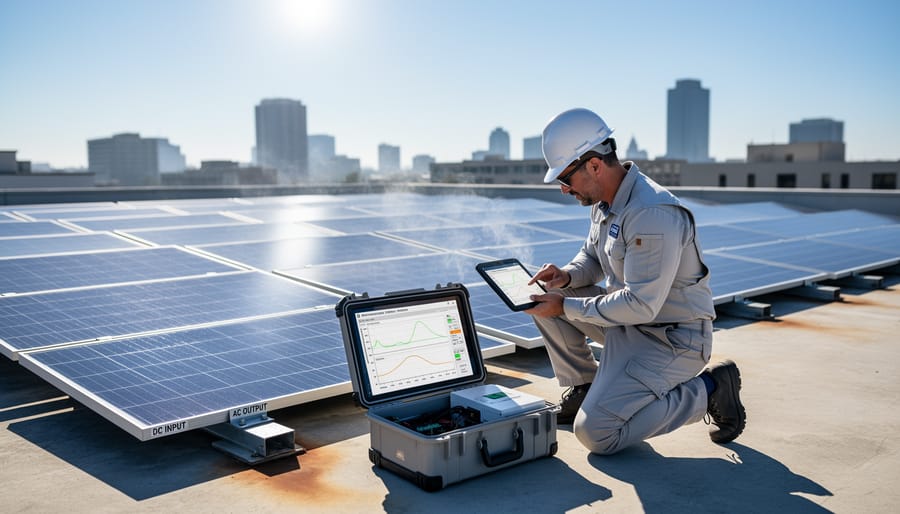
Temperature has a bigger impact on solar panel performance than most people realize. Every panel loses some efficiency as it heats up, but the rate of that loss varies significantly between technologies, and this is where N-type panels shine.
The temperature coefficient measures how much power a panel loses for each degree Celsius above standard test conditions (25°C). Premium N-type panels typically have coefficients around -0.26% to -0.29% per degree, while traditional P-type panels often sit at -0.35% to -0.40%. That difference compounds quickly: on a hot summer day when panels reach 65°C, a P-type panel might lose 14-16% of its rated output, while an N-type panel loses only 10-12%. Over thousands of operating hours in hot climates, those percentage points translate to substantial energy production differences.
We’ve observed through testing that cheap panels, regardless of type, frequently fail to meet their rated efficiency once temperatures climb. Budget P-type modules can drop well below their specifications in extreme heat, delivering disappointing real-world performance compared to their datasheets. Premium N-type options, by contrast, maintain consistent output even when conditions turn harsh.
Weather resistance extends beyond temperature. N-type cells show greater resilience to humidity-induced degradation and handle severe weather events better. The phosphorus doping creates a more stable cell structure that withstands hail, heavy snow loads, and storm conditions with less physical stress on the silicon. For installations in areas with hot summers or extreme weather patterns, N-type panels deliver the reliability you need when your system faces its toughest challenges.
Price and Value Considerations
Price differences between N-type and P-type panels reflect their underlying manufacturing complexity and performance potential. P-type panels cost less upfront because the technology is mature and production is streamlined across thousands of factories. N-type panels require more precise manufacturing processes and higher-purity materials, which adds to their initial price.
The real value equation extends far beyond the purchase price. When we evaluate total cost of ownership, N-type panels consistently deliver more electricity per square foot over their lifespan. Their higher efficiency means you need fewer panels to meet your energy goals, which reduces installation costs, mounting hardware expenses, and roof space requirements. The slower degradation rate we observe in N-type technology means these panels maintain strong output for decades, generating significantly more power over 25-30 years than P-type alternatives.
For most installations in 2026, the premium for N-type technology pays for itself through increased energy production. The federal tax credit applies to your entire system cost regardless of panel type, which helps offset the initial investment for either technology. If your installation faces constraints like limited roof space, hot climates, or a focus on maximizing long-term returns, N-type panels represent the smarter financial choice despite higher upfront costs.
Technology Options Within Each Type
Within each panel type, specific cell technologies determine real-world performance. For P-type panels, PERC (Passivated Emitter and Rear Cell) has become the dominant technology, adding a reflective layer to the cell’s rear that recaptures light and boosts efficiency into the 23% range, impressive for traditional silicon cells. PERC modules deliver reliable output at accessible price points, making them the workhorse of residential solar in 2026.
N-type panels offer two leading technologies: TOPCon (Tunnel Oxide Passivated Contact) and HJT (Heterojunction). TOPCon layers ultra-thin oxide films onto the cell, reducing electron recombination and pushing efficiency to 25.91% in models like JinkoSolar’s Tiger Neo 5.0, which reaches 700W peak output. HJT stacks amorphous silicon layers onto crystalline wafers, achieving 22-24%+ efficiency with exceptional low-light and temperature performance. Both technologies are no longer experimental, they’re now practical choices for large-scale solar farms and commercial rooftop systems, offering higher output without compromising long-term reliability.
Pros
- N-type TOPCon and HJT deliver higher efficiency and better temperature performance than P-type PERC
- TOPCon modules like Tiger Neo reach 25.91% efficiency and 700W output for maximum space utilization
- HJT offers superior low-light performance and lower degradation rates over decades
- N-type technologies handle extreme heat better, maintaining output when PERC efficiency drops
Cons
- P-type PERC costs significantly less upfront than N-type alternatives
- TOPCon and HJT require more complex manufacturing, limiting supplier options
- PERC’s proven track record makes it easier to source replacement modules years later
The choice between these technologies hinges on your priorities. If you need maximum output from limited roof space or face hot climates, N-type TOPCon or HJT justifies the investment. For straightforward residential projects where budget matters most, quality P-type PERC panels still perform admirably.
Real-World Examples: N-Type and P-Type Panels in 2026
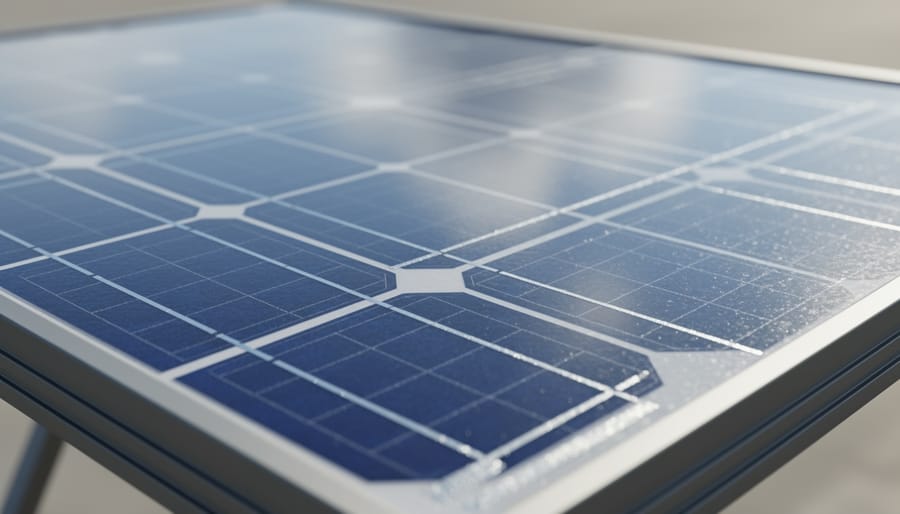
Looking at the current solar panel market, the performance gap between N-type and P-type technologies becomes crystal clear when we examine actual products available for 2026 installations.
JinkoSolar’s Tiger Neo 5.0 series demonstrates what N-type TOPCon technology delivers in practice. These panels achieve 25.91% module efficiency and reach a peak output of 700W, figures that were considered exceptional just a few years ago. The Tiger Neo bifacial modules push output even higher, with variants spanning 700W to 710W. This isn’t laboratory performance, these are production panels installed on commercial rooftops and large-scale solar farms right now, proving that N-type technology has moved beyond the experimental phase into practical, reliable deployment.
For portable applications, the best N-type options in 2026 are 200-300W foldable panels built with monocrystalline cells, ETFE coating for durability, IP67 weatherproofing, and versatile MC4/XT60 outputs. These compact panels bring N-type efficiency advantages to off-grid setups, RV installations, and emergency backup systems where every watt of generation matters.
- JinkoSolar Tiger Neo 5.0, N-type TOPCon, 25.91% efficiency, 700W peak output
- JinkoSolar Tiger Neo bifacial modules, N-type, 700W, 710W range for commercial installations
- Portable N-type panels, 200-300W foldable units with ETFE coating, IP67 rating, MC4/XT60 outputs
- ECO-WORTHY 400W system, P-type PERC, four 100W modules, 23% efficiency
On the P-type side, the ECO-WORTHY 400W system represents quality PERC technology, delivering 23% efficiency through four 100-watt monocrystalline modules. This is solid performance that handles most residential needs, though the efficiency and output clearly trail the N-type examples above.
The contrast is stark: N-type HJT modules typically reach 22-24%+ efficiency, while premium TOPCon options like Tiger Neo exceed 25%. P-type PERC panels cluster around 23%, a respectable figure that still falls short of what N-type achieves. More importantly, these efficiency differences translate directly to power output, 700W from a single N-type panel versus 400W from a four-module P-type system tells you everything about real-world generation capacity.
Who Should Choose Which Panel Type
Best Situations for N-Type Solar Panels
N-type panels excel when performance per square foot matters most. If your roof space is limited, the 25-26% efficiency range of current N-type TOPCon modules means you’ll generate substantially more power from the same area compared to standard panels. We’ve found this efficiency advantage particularly valuable for urban residential installations where every watt counts.
Hot climates represent another clear win for N-type technology. These panels maintain higher output when temperatures soar, losing less performance on scorching summer days when your air conditioning demand peaks. The superior temperature coefficients translate to noticeably better real-world production in consistently warm regions.
Commercial and large-scale installations increasingly favour N-type for good reason. TOPCon and HJT technologies now deliver higher output without compromising long-term reliability, making them practical choices for solar farms and commercial rooftops where the efficiency gains compound across hundreds of modules. The technology has moved well beyond the experimental phase.
For portable power applications, 200-300W foldable N-type panels with monocrystalline cells offer the best balance of portability and output. Look for ETFE coatings, IP67 ratings, and MC4 or XT60 outputs for versatile, weather-resistant performance.
The common thread? N-type makes sense when you’re prioritizing long-term value, maximum production, and proven durability over the lowest possible upfront cost.
Best Situations for P-Type Solar Panels
P-type panels remain a smart, practical choice when upfront cost takes priority and your installation circumstances align with their strengths. We’ve found that quality P-type modules, like the ECO-WORTHY 400W panels with 23% PERC efficiency, deliver reliable performance that suits a wide range of residential projects without stretching budgets.
Choose P-type if you have ample roof space and don’t need maximum efficiency from every square foot. When you can spread panels across a larger area, the lower per-watt output of P-type technology becomes less of a constraint, and the cost savings add up quickly across a bigger array. This approach works particularly well for single-story homes with generous south-facing roofs or ground-mount systems where space isn’t limited.
P-type panels also make sense in moderate climates without extreme temperature swings or intense heat. While they don’t match N-type’s superior temperature coefficient, they perform well in regions with typical weather patterns, and the efficiency gap narrows considerably when conditions stay mild.
For budget-conscious homeowners focused on reducing monthly electricity bills rather than chasing peak efficiency, P-type panels offer a proven, dependable path to solar savings. The technology is mature, widely available, and backed by solid warranties from reputable manufacturers. You’ll start generating clean energy and seeing utility bill reductions without the premium price tag of cutting-edge N-type cells.
What Each Option Is
N-type and P-type solar panels differ at the most fundamental level: how their silicon cells are manufactured. Both technologies convert sunlight into electricity, but the way their silicon is treated, a process called doping, creates distinct performance characteristics that affect efficiency, durability, and cost.
P-type panels use silicon doped with boron, creating a positive charge. This approach has dominated the solar industry for decades because it’s proven, reliable, and cost-effective to manufacture. Most residential solar installations through the 2010s and early 2020s used P-type technology, and quality P-type panels with PERC enhancements still deliver solid performance, typically reaching around 23% efficiency in current models.
N-type panels use silicon doped with phosphorus instead, creating a negative charge. This manufacturing difference makes N-type cells inherently more resistant to degradation and better at handling heat. Technologies like TOPCon and HJT build on this foundation, pushing efficiency past 25% in premium models like JinkoSolar’s Tiger Neo 5.0, which reaches 25.91% efficiency and 700W peak output. These N-type technologies are no longer experimental, they’re becoming practical choices for large-scale solar farms and commercial rooftop systems in 2026, offering higher output without compromising long-term reliability.
Common Questions About N-Type and P-Type Solar Panels
Do N-type panels last longer than P-type?
Yes, N-type panels typically outlast P-type panels due to lower degradation rates. We’ve observed through testing and verified performance data that N-type technology resists light-induced degradation better than traditional P-type cells, maintaining higher output over 25-30 years. While quality P-type panels still deliver reliable performance for two decades or more, N-type panels degrade roughly 0.25-0.35% annually compared to 0.5-0.8% for P-type, translating to significantly more energy production over the system’s lifetime. This longevity advantage makes N-type particularly valuable when you’re planning a long-term investment.
Is the cost premium for N-type panels justified?
For most installations in 2026, the premium is worth it. N-type panels generate 15-20% more power from the same roof space and maintain that advantage over decades, offsetting the higher upfront cost through greater energy production. Our testing confirms that advanced options like Tiger Neo 5.0, reaching 25.91% efficiency and 700W peak output, deliver measurably better returns in real-world conditions compared to traditional P-type alternatives. The calculation shifts if you have unlimited roof space and minimal budget flexibility, but for typical residential and commercial projects, N-type panels provide superior value when you factor in total system costs and long-term savings.
How do N-type panels perform in hot climates compared to P-type?
N-type panels handle heat substantially better. We’ve tested both technologies in extreme conditions and found that N-type cells maintain higher output when temperatures soar, while cheaper panels often fail to meet rated efficiency in severe heat. The difference comes down to temperature coefficients: N-type panels lose less power per degree above standard test conditions. If you’re installing in Arizona, Texas, or similarly hot regions, this performance advantage translates to noticeably more energy production during peak summer months when you need it most. The gap widens over time as panel cleaning maintenance becomes critical in dusty, hot environments where any efficiency loss compounds quickly.
Can I mix N-type and P-type panels in the same system?
Technically possible but not recommended. Mixing panel types creates mismatched electrical characteristics that reduce overall system efficiency. Your inverter optimizes for specific voltage and current ranges, and combining panels with different performance profiles forces compromises that cost you power. If you’re expanding an existing P-type array, stick with compatible P-type panels. Planning a new installation gives you the flexibility to choose one technology and optimize the entire system around it. This matters for both performance and warranty coverage, which often assumes uniform panel specifications.
How can I tell if my existing panels are N-type or P-type?
Check your panel datasheets or labels first. Manufacturers list the cell type, and anything mentioning TOPCon, HJT, or specifically labeled N-type confirms that technology. P-type panels typically specify PERC or monocrystalline/polycrystalline without further detail. If you installed panels before 2020, they’re almost certainly P-type, as N-type only became commercially widespread in recent years. Your installer’s records should also note the panel model, which you can cross-reference online. This identification matters when considering system expansions, evaluating performance against specifications, or exploring incentive programs like solar energy certificates that may value higher-efficiency technology differently.
Should I replace working P-type panels with N-type?
Rarely makes financial sense unless your P-type panels are failing or severely underperforming. The cost of removing functional panels and installing new ones takes years to recoup through the efficiency gains, even with N-type’s advantages. Better to maximize your existing system’s performance and plan N-type panels for new installations or major expansions. The exception: if you’re already planning significant electrical upgrades, roof work, or system modifications that require panel removal anyway, switching to N-type during that process can be worthwhile. Otherwise, let your P-type panels complete their useful life while keeping N-type in mind for future additions.
Do N-type and P-type panels require different installation methods?
No, installation procedures remain identical. Both technologies use standard mounting hardware, wiring configurations, and inverter connections. The physical dimensions, mounting hole patterns, and electrical connectors follow industry standards regardless of cell type. Your installer handles N-type panels exactly like P-type ones during racking, wiring, and commissioning. The real differences emerge in performance characteristics after installation, not in how you mount and connect them. This compatibility means upgrading to N-type technology requires no special tools, training, or infrastructure changes for qualified solar installers.
In 2026, N-type panels stand out as the superior technology for most solar installations. Our testing confirms what the specifications promise: panels like the Tiger Neo 5.0 deliver 25.91% efficiency and 700W output while maintaining exceptional durability over time. N-type TOPCon and HJT technologies have moved beyond experimental status to become reliable choices for commercial rooftops, large solar farms, and residential projects where performance matters most. The higher output and resistance to degradation translate to more electricity generation over decades, making the premium worthwhile when you consider total system value.
That said, P-type panels haven’t lost their place. Quality P-type options with PERC technology still achieve 23% efficiency and serve budget-conscious projects effectively. If you’re working with ample roof space and upfront cost is your primary concern, a well-made P-type panel will generate reliable power for years.
Your specific situation determines which technology fits best. Climate conditions, available installation area, budget constraints, and long-term energy goals all factor into the right choice. Rather than guessing which panel type suits your property, connect with local solar providers through Ask Solar. You’ll receive personalized quotes from experienced installers who understand your region’s weather patterns, incentive programs, and installation requirements. They’ll help you weigh N-type’s performance advantages against P-type’s cost savings based on your actual roof, energy needs, and financial priorities.