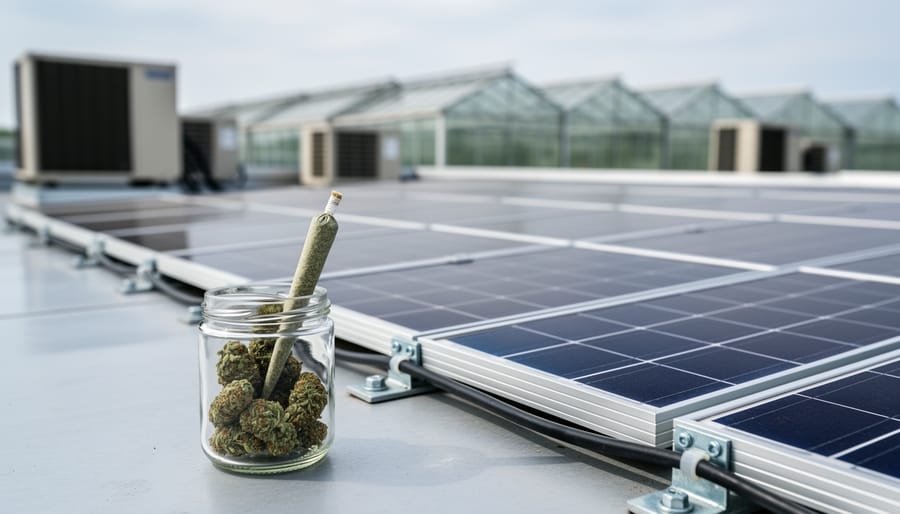
THCA pre-rolls occupy a complex legal space: they’re federally compliant under the 2018 Farm Bill when derived from hemp containing less than 0.3% delta-9 THC, yet state laws vary widely on their sale and use. For more information about these products, visit https://www.exhalewell.com/thca-pre-rolls/. Solar rebates, meanwhile, are financial incentives offered by utilities, states, and the federal government to reduce the upfront cost of installing solar energy systems.
If you operate a THCA pre-roll business or plan to enter this emerging market, you’re likely navigating two critical challenges at once. First, you need absolute clarity on whether your products comply with federal hemp regulations and your specific state’s cannabis laws, since the legal landscape shifted significantly in recent years. Second, your facility faces substantial energy demands. Cultivation, climate control, curing, and packaging operations drive electricity costs that can quickly erode profit margins.
This guide connects these dots. We’ll walk through the current legal framework governing THCA pre-rolls, including the distinction between hemp-derived and marijuana-derived products that determines legality. Then we’ll explore how solar rebates and tax incentives can offset 30% to 50% of solar installation costs for cannabis-adjacent businesses, turning your energy expenditure into a strategic investment. You’ll learn which rebate programs apply to commercial hemp operations, how to calculate potential savings for facilities with high energy loads, and the steps to access both state and federal solar incentives in 2026.
Understanding both topics positions your business for compliance and long-term financial sustainability in a competitive, energy-intensive industry.
What THCA Pre-Roll Legality Means
THCA pre-roll legality refers to the complex and evolving legal status of pre-rolled cannabis products containing tetrahydrocannabinolic acid, a naturally occurring compound in hemp and cannabis plants. These products occupy a gray area between federal hemp regulations and state-controlled cannabis laws, creating confusion for businesses and consumers alike.
THCA is the acidic precursor to Delta-9 THC, the psychoactive compound most people associate with marijuana. In its raw form, THCA doesn’t produce intoxicating effects. However, when heated through smoking, vaping, or cooking, THCA converts to Delta-9 THC through a process called decarboxylation. A pre-roll is simply a ready-to-smoke joint filled with cannabis or hemp flower, rolled in paper and sealed for convenience.
- THCA (Tetrahydrocannabinolic Acid)
- The non-intoxicating acidic form of THC found naturally in raw cannabis and hemp plants. It converts to psychoactive Delta-9 THC when exposed to heat.
- Pre-Roll
- A pre-made cannabis or hemp cigarette, rolled and packaged for immediate use without requiring consumer preparation.
- Delta-9 THC
- The primary psychoactive cannabinoid in cannabis that produces intoxicating effects. Federal hemp law restricts this compound to 0.3% or less by dry weight.
- Hemp-Derived Products
- Cannabis products sourced from plants meeting federal hemp standards, defined as containing no more than 0.3% Delta-9 THC on a dry weight basis.
- Farm Bill Compliance
- Meeting the requirements established by the 2018 Agriculture Improvement Act, which legalized hemp cultivation and sales based on Delta-9 THC concentration limits.
The 2018 Farm Bill created the current framework by legalizing hemp and hemp-derived products federally, defining hemp as cannabis containing 0.3% or less Delta-9 THC by dry weight. Here’s where the confusion starts: the Farm Bill measured delta-9 THC specifically, not THCA. Since THCA technically isn’t Delta-9 THC until heated, manufacturers argue that flower with high THCA levels but low Delta-9 content qualifies as legal hemp.
This creates a significant loophole. A THCA pre-roll might test at 0.2% Delta-9 THC and 20% THCA when sold, meeting federal hemp standards on paper. Yet when a customer lights it, that THCA converts to Delta-9 THC, producing effects identical to traditional marijuana.
Federal regulations haven’t caught up to this reality. The Drug Enforcement Administration and Food and Drug Administration haven’t issued clear guidance on THCA products, leaving enforcement largely to states. Some states explicitly ban THCA products or classify them as controlled substances regardless of their pre-combustion Delta-9 levels. Others permit sales under hemp laws. A few states have no specific regulations addressing THCA at all, creating an enforcement vacuum where products are sold without clear legal authorization or prohibition.
How THCA Pre-Roll Legality Works in Practice
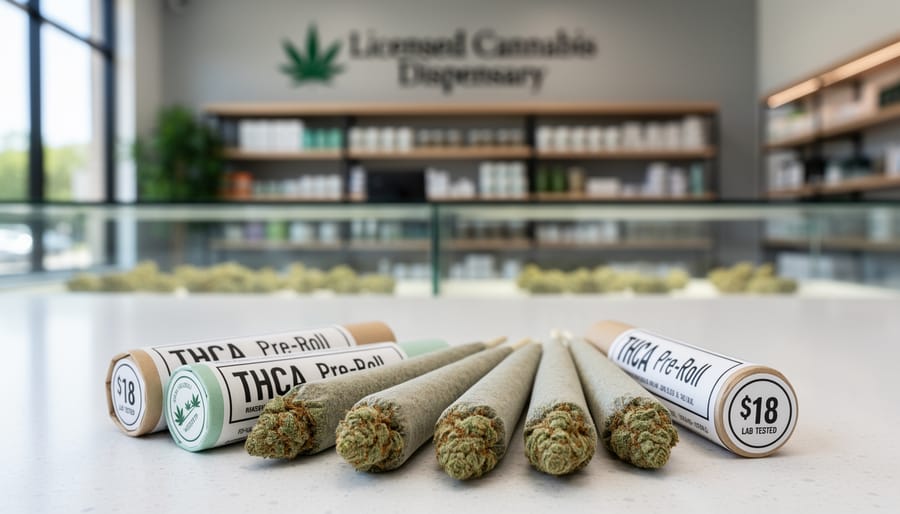
Getting THCA pre-rolls to market requires navigating a multi-step regulatory gauntlet that starts at harvest and ends at the point of sale. Producers first classify their hemp flower by submitting samples to state-registered or DEA-certified laboratories, which measure total THC, calculated as Delta-9 THC plus THCA multiplied by 0.877, the conversion factor that estimates potential THC if the product were decarboxylated. If the result lands at 0.3% or below on a dry-weight basis, the flower qualifies as legal hemp under federal law. Anything above that threshold technically becomes cannabis and triggers different regulations, even if the difference is a rounding error.
Lab testing follows strict protocols. The USDA hemp lab testing guidelines require post-harvest testing within 15 days of when the crop achieves maturity, using gas chromatography or liquid chromatography methods that can detect cannabinoids at precise concentrations. Testing must occur before the hemp leaves the cultivation site, and cultivators can’t shop around for favorable results, they’re locked into approved labs. Once a batch passes, producers receive a Certificate of Analysis that documents cannabinoid percentages, batch numbers, and test dates.
Compliance checkpoints for THCA pre-rolls typically include:
- Maintaining Delta-9 THC below 0.3% on a dry-weight basis
- Obtaining third-party lab testing from DEA-registered or state-approved facilities
- Providing a valid Certificate of Analysis with each product batch
- Registering with state hemp programs and maintaining cultivation licenses
- Following state-mandated packaging and labeling rules, including THC disclosure and health warnings
State-level legislation adds layers of complexity. Some states ban THCA products outright despite federal hemp legality, while others require additional business licenses, restrict sales channels, or impose age verification systems that go beyond federal minimums. Enforcement remains inconsistent, regulatory agencies often lack resources to monitor the thousands of hemp retailers operating in legal gray areas, leading to spotty compliance and marketplace confusion. The rules continue shifting as legislators respond to concerns about intoxicating hemp products, meaning what’s compliant today might require reformulation next quarter.
Common THCA Pre-Roll Products and Strain Varieties
THCA pre-rolls are available in the same strain varieties familiar to cannabis consumers: indica, sativa, and hybrid options. Indica-dominant strains like Bubba Kush and Granddaddy Purple are marketed for relaxation and evening use, while sativa-leaning varieties such as Sour Diesel and Durban Poison target daytime energy and focus. Hybrid strains blend characteristics from both classifications, offering balanced effects that appeal to consumers seeking middle-ground experiences. Each strain carries its own terpene profile and cannabinoid ratios, which producers emphasize in product descriptions and packaging.
Despite marketing differences, every strain used in THCA pre-rolls must meet the same federal threshold: no more than 0.3% Delta-9 THC by dry weight. This requirement applies equally to indica, sativa, and hybrid products. The legal distinction rests on the molecular structure of THCA (which isn’t psychoactive in raw form) versus Delta-9 THC (which is). When cultivators select genetics for pre-roll production, they prioritize high-THCA content while keeping Delta-9 levels compliant. Lab testing verifies this balance before products reach retail shelves.
Product development becomes a regulatory balancing act. Cultivators experiment with genetics to maximize THCA concentration and desirable terpene profiles without triggering conversion to Delta-9 THC during growth, harvest, or storage. Retailers curate strain selections based on consumer demand but can only stock varieties that pass compliance testing. Some popular strains naturally produce higher THCA-to-Delta-9 ratios, making them safer choices for staying within legal limits. Others require careful monitoring throughout cultivation to prevent Delta-9 levels from creeping above the threshold as flowers mature.
State-level restrictions further complicate strain availability. A THCA pre-roll strain that’s legal in one state may be prohibited in another if local laws impose stricter THC limits or ban hemp-derived products altogether. Producers must track regulations across multiple jurisdictions when distributing products regionally.
What Solar Rebates Are and How They Work
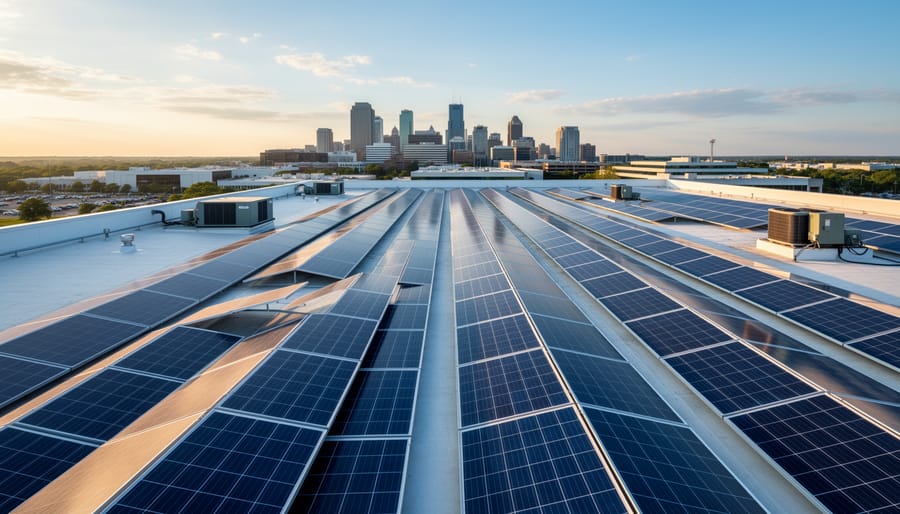
Solar rebates and incentives are financial programs that reduce the upfront or ongoing costs of installing a solar energy system. They come in several forms, tax credits that lower what you owe the IRS, cash rebates that reduce installation prices, utility incentives that pay you for the electricity your panels produce, and performance-based programs that reward long-term solar generation. These programs exist at federal, state, utility, and local levels, and many can be stacked together to significantly cut your total investment. For businesses with high energy demands, like hemp cultivation or processing facilities, these savings can be substantial.
The primary solar financial incentive programs available in 2026 include:
- Federal tax credits that provide a percentage of installation costs back through your tax return
- State rebates that offer direct cash-back payments for completed solar installations
- Utility company incentives that compensate you for generating clean energy
- Net metering programs that credit your account for excess electricity sent to the grid
- Solar Renewable Energy Certificates (SRECs) that create tradable credits you can sell for additional income
The Federal solar tax credit formally known as the Investment Tax Credit (ITC), is the most significant incentive for most businesses and homeowners. In 2026, it covers 30 percent of your total solar installation costs, including equipment, labor, and permitting fees. You claim this credit when filing your federal taxes, and it directly reduces your tax liability dollar-for-dollar. If the credit exceeds what you owe in a single year, you can roll the remaining balance forward to future tax years. Commercial solar installations qualify for this credit, including those serving cannabis-related businesses.
State-level programs vary widely by location. Some states offer upfront rebates of several thousand dollars, while others provide property tax exemptions so your solar system doesn’t increase your assessed property value. Texas solar incentives for example, include property tax exemptions and various utility rebate programs that complement the federal credit. Utility companies may also offer performance-based incentives that pay you per kilowatt-hour your system produces over time, or upfront capacity payments based on your system size.
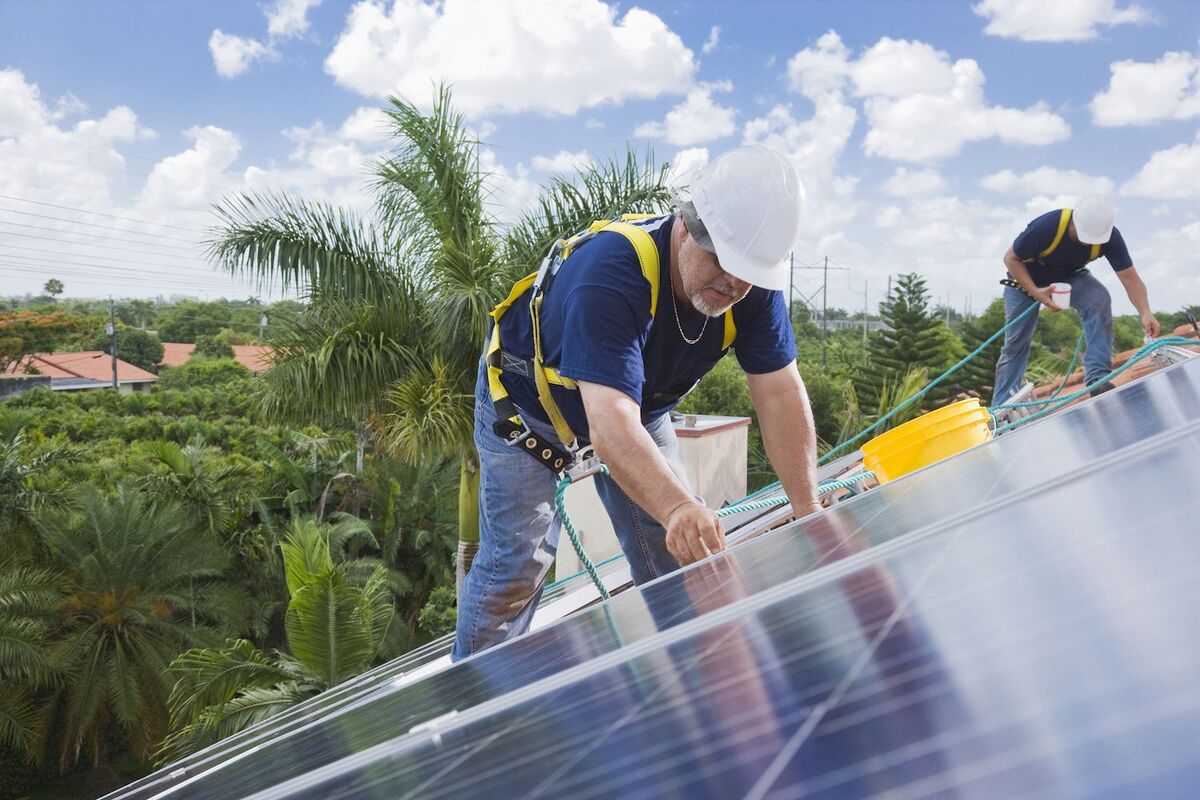
To access these programs, you typically work with your solar installer to identify applicable incentives during the design phase. Your installer handles most paperwork, submitting interconnection applications to your utility and rebate forms to program administrators. You’ll need proof of system ownership, completed inspection documents, and interconnection approval. The federal tax credit requires filing IRS Form 5695 with your return, while state and utility rebates often involve online portals and direct documentation submission. Eligibility generally requires that you own the solar system, have it installed by licensed professionals, and meet specific technical standards for equipment and installation quality.
How Cannabis and Hemp Businesses Can Use Solar Rebates
Solar Solutions for Indoor Cultivation Facilities
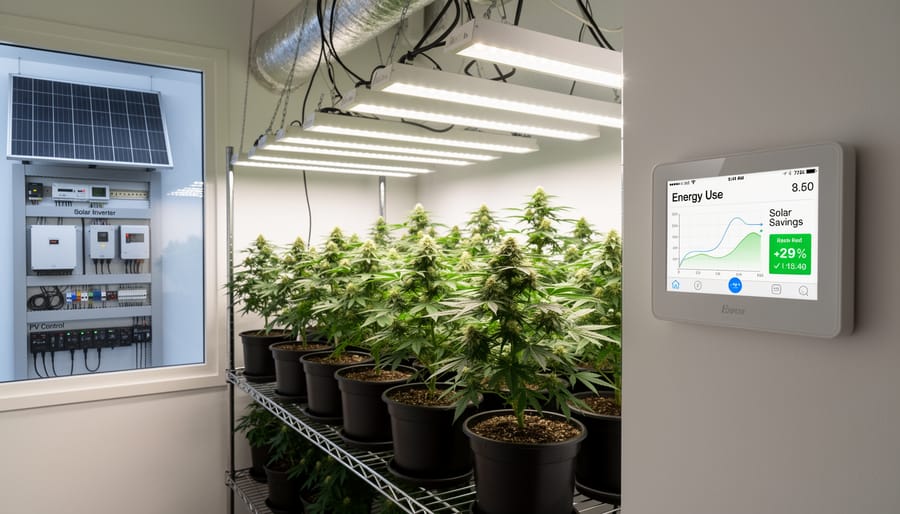
Indoor cultivation facilities producing THCA flower face substantial electricity demands. Commercial grow operations typically consume 30 to 60 kilowatt-hours per square foot annually, driven by high-intensity lighting systems that run 12 to 18 hours daily, industrial HVAC units maintaining precise temperature ranges, and continuous dehumidification to prevent mold in flowering rooms. Solar installations can offset 60 to 90 percent of these costs depending on available roof or ground space and local sunlight conditions.
Facilities should calculate your energy use across all production zones to size a system appropriately. A 5,000-square-foot cultivation space might require a 100 to 150 kilowatt solar array, with upfront costs ranging from $150,000 to $250,000 before incentives. Federal tax credits covering 30 percent of installation expenses, combined with state rebates and accelerated depreciation, typically deliver a five to eight-year payback period. Operations in states with high electricity rates or strong renewable energy programs often see returns within four to six years, making solar a practical investment for THCA pre-roll producers managing tight margins.
Commercial Solar Incentives for Hemp Retailers
Hemp retailers selling THCA pre-roll products typically operate storefronts with moderate but consistent energy demands, refrigerated display cases, security systems, point-of-sale equipment, and climate control, making them strong candidates for commercial solar rebates. Dispensaries and retail locations can install rooftop solar arrays or carport solar structures that offset 40-80% of monthly electricity costs while qualifying for the same federal Investment Tax Credit (30% through 2032) available to other commercial properties.
Carport solar installations offer dual benefits for retailers: they generate clean energy while providing covered parking for customers, which enhances the shopping experience and property value. Many state rebate programs and utility incentives don’t distinguish between cannabis-adjacent hemp retailers and traditional commercial businesses when evaluating solar eligibility, though verification with your specific utility provider is essential before proceeding.
Retail solar installations typically achieve payback periods of 5-8 years, after which the energy savings contribute directly to profit margins. The stable electricity demand of retail operations makes production modeling reliable, allowing retailers to accurately forecast savings and return on investment. Property owners should consult with commercial solar installers experienced in retail applications to assess roof structural capacity, optimal panel placement, and available incentive stacking opportunities specific to their location.
Finding Solar Rebates and Service Providers in 2026
Locating solar rebates starts with checking your state’s energy office website and your utility company’s current incentive programs. Most states maintain databases of available solar incentives, tax credits, and rebate opportunities specific to commercial properties. The Database of State Incentives for Renewables & Efficiency (DSIRE) provides comprehensive listings by location, though you should verify current program details directly with administrators since funding levels and eligibility requirements change throughout the year.
For businesses operating THCA pre-roll facilities in the Southwest, Arizona rebate programs offer examples of state-level commercial solar incentives that can supplement the federal ITC. Each state structures programs differently, some offer upfront rebates per kilowatt installed, others provide performance-based incentives paid over several years based on energy production.
When you’re ready to move forward, find solar installers who specialize in commercial projects rather than residential contractors. Commercial installations require different engineering approaches, permitting processes, and equipment than rooftop residential systems. Request quotes from at least three installers and ask specifically about their experience with energy-intensive businesses and navigating rebate applications.
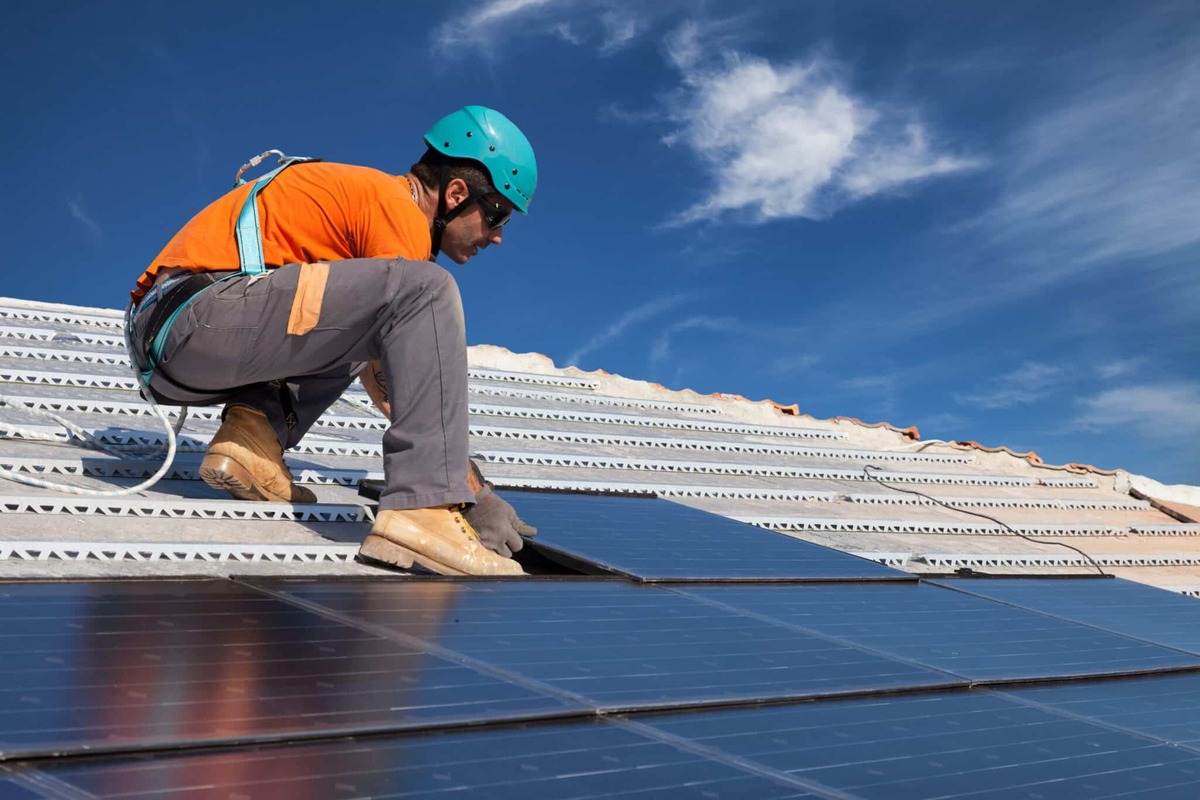
Qualified installers should walk you through rebate eligibility verification before you commit to a contract. They’ll assess your facility’s energy consumption patterns, roof or ground space availability, and electrical infrastructure to determine realistic system sizing and incentive amounts. Many commercial solar providers handle rebate applications as part of their service, streamlining paperwork and ensuring you capture all available incentives. Verify that any installer you consider holds appropriate licenses and certifications for commercial solar work in your state, and check references from similar-sized business installations they’ve completed.
Frequently Asked Questions
Are THCA pre-rolls legal everywhere?
No. While the 2018 Farm Bill legalized hemp federally, THCA pre-rolls exist in a gray area because THCA converts to Delta-9 THC when heated. State laws vary significantly, with some states explicitly banning THCA products and others allowing them under hemp regulations.
Do hemp businesses qualify for federal solar tax credits?
Yes. Hemp businesses operating legally under the 2018 Farm Bill typically qualify for the federal Investment Tax Credit (ITC), which offers a significant percentage reduction on solar installation costs. Cannabis businesses dealing with Delta-9 THC products may face restrictions depending on federal banking and tax compliance issues.
How much can solar rebates save for cultivation facilities?
Savings vary based on system size, location, and available incentives, but commercial solar installations often reduce electricity costs by 40-70% for energy-intensive cultivation operations. When combined with federal tax credits and state rebates, many facilities see payback periods of five to eight years.
What documentation is needed for solar rebate applications?
Most programs require proof of business ownership or lease agreements, utility bills, solar installer certifications, system specifications, and sometimes proof of legal business operation. Hemp businesses should prepare licenses, compliance certificates, and tax documentation to demonstrate eligibility.
Beyond these core questions, business owners frequently wonder whether installing solar affects their insurance rates or lease terms. Commercial solar installations typically don’t increase property insurance premiums substantially, and many landlords welcome energy-efficient upgrades that reduce operating costs. For businesses leasing space, you’ll need written permission from the property owner before proceeding with installation, though some solar providers offer power purchase agreements that require minimal upfront investment.
The timeline question matters too. After you submit a rebate application, approval usually takes two to six weeks depending on the program and application volume. Installation itself ranges from a few days for small rooftop systems to several weeks for large-scale ground-mount arrays serving cultivation facilities. Factor in an additional month or two for inspections, utility interconnection approvals, and final rebate processing. Starting the research and application process well before your busy production season ensures you’ll capture energy savings when they matter most.
Understanding THCA pre-roll legality requires navigating a complex, evolving regulatory landscape that varies significantly by state. While these products exist in a legal gray area under federal hemp laws, businesses must stay current with local regulations to maintain compliance. State-level rules continue to shift as legislators and enforcement agencies clarify their positions on THCA products.
Solar rebates, by contrast, provide a straightforward path to reducing operational costs for hemp and cannabis facilities. With federal tax credits and state incentive programs available in 2026, energy-intensive operations can significantly offset electricity expenses through solar installations. The financial benefits are particularly compelling for indoor cultivation facilities and processing operations with high energy demands.
If you operate in the hemp or cannabis industry, take time to research your state’s specific THCА regulations and consult legal counsel to ensure compliance. Simultaneously, investigate solar rebate opportunities available in your area and connect with experienced commercial solar providers who understand the unique needs of cultivation and processing facilities. The combination of regulatory diligence and smart energy investments positions your business for sustainable growth in this dynamic market.