After testing the leading solar panels available in 2026, we found that efficiency, warranty length, and long-term value separate top performers like SunPower, REC, Panasonic, and LG from the rest. If you need maximum power output from limited roof space, high-efficiency models around 22-23% now deliver meaningfully more electricity per square foot than budget alternatives. For most homeowners, though, the sweet spot lies in mid-range N-type TOPCon panels that combine strong performance with competitive pricing.
Solar adoption has reached a tipping point. More than five million U.S. households now generate their own electricity, and the Solar Energy Industries Association expects that figure to double by 2030. This surge means manufacturers are racing to improve technology while driving costs down. Mid-range panels routinely hit efficiencies that premium models claimed just a few years ago, and warranty coverage has standardized at 25 years across leading brands.
The challenge isn’t finding a good panel anymore. It’s identifying which type matches your roof layout, budget, and energy goals. We evaluated current models across efficiency ratings, warranty terms, real-world durability, and cost per watt to give you a clear framework. Some panels excel in hot climates; others maximize output in partial shade. REC’s 460W model earned top marks in independent 2026 rankings for balancing performance and reliability, but your situation might call for a different choice. This comparison walks you through exactly what distinguishes each option and who should choose which.
Solar Panel Comparison at a Glance
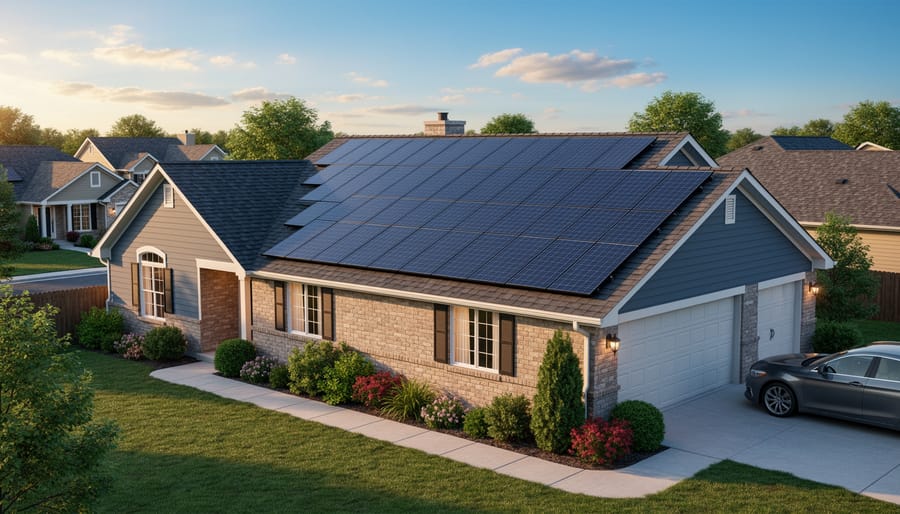
When you’re comparing solar panels in 2026, you’re choosing among brands and technologies that all deliver reliable energy but differ in efficiency, backing, and value. The manufacturers that consistently top our evaluations, REC, Maxeon, Silfab, Qcells, Canadian Solar, SunPower, LG, and Panasonic, offer panels with efficiencies spanning roughly 20% to over 25%, depending on tier and technology. Premium options from SunPower, LG, REC, and Panasonic achieve the highest conversion rates and come with robust 25-year warranties covering both product defects and performance guarantees. Mid-range brands like Qcells, Canadian Solar, and Silfab now routinely deliver 22-23% efficiency thanks to advances in N-type TOPCon cell architecture, narrowing the gap with premium tiers while costing less upfront.
| Brand / Model Tier | Efficiency Range | Warranty | Best Use Case |
|---|---|---|---|
| Premium (SunPower, LG, REC, Panasonic) | 23-25%+ | 25 years product & performance | Space-limited roofs, maximum output |
| Mid-Range (Qcells, Canadian Solar, Silfab) | 22-23% | 25 years (varies by model) | Balanced value, typical residential installs |
| Budget / Entry-Level | 18-21% | 10-25 years | Large roof area, cost-conscious projects |
At the top of the 2026 rankings, REC’s 460W panel earned best-overall recognition from NUWATT Energy for combining high efficiency with proven durability and strong warranty support. Maxeon’s 475W model and Silfab’s 440W option similarly demonstrate that today’s leading panels deliver serious power per module. The common thread among these top picks is the 25-year warranty standard, which reflects manufacturer confidence and protects your investment over the panel’s operational life. Understanding where each brand and model falls on the efficiency-price-warranty spectrum lets you match a panel to your roof, budget, and energy goals rather than choosing on brand name alone.
Understanding the Solar Panels You’re Comparing
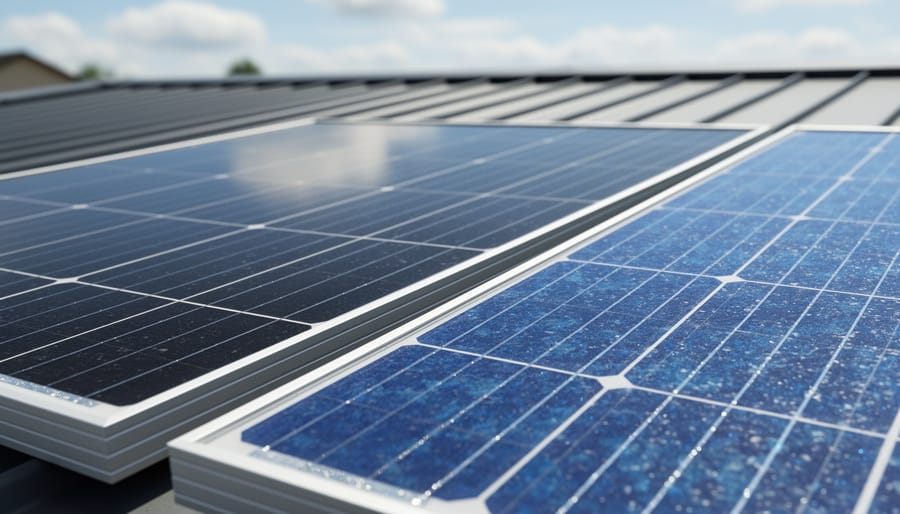
Premium Tier Panels
Premium panels from SunPower, LG, REC, and Panasonic represent the highest tier of residential solar technology, and we’ve found they justify their price premium through measurable advantages in three areas: efficiency, warranty protection, and long-term reliability.
These manufacturers consistently deliver panels with efficiencies above 22%, with some models pushing past 25%, meaning they generate more power per square foot than mid-range alternatives. That matters most if your roof space is limited or you want to maximize output from every available surface. Understanding how solar panels work helps clarify why efficiency differences translate directly into real-world production gaps.
Premium panels also come with robust 25-year warranties covering both the product itself and performance guarantees. SunPower, LG, REC, and Panasonic back their panels with financial stability and established service networks, which matters when you need to file a claim two decades from now. We’ve seen budget manufacturers fold or disappear, leaving owners with worthless warranties.
The third advantage is proven degradation rates. Premium panels typically lose less than 0.5% efficiency per year, maintaining 85-90% of original output after 25 years. For homeowners who view solar as a 30+ year investment rather than a short-term upgrade, that longevity compounds into thousands of additional kilowatt-hours over the system’s life, though mastering solar energy basics first helps you evaluate whether you need that level of performance for your specific energy goals.
Mid-Range Panels
Mid-range panels have become remarkably competitive in 2026, closing the efficiency gap with premium options while maintaining accessible pricing. Manufacturers like Qcells, Canadian Solar, and Silfab now produce panels that routinely achieve 22-23% efficiency, a performance level that was premium territory just a few years ago.
We’ve found these panels strike an excellent balance for most homeowners. They deliver strong output without the premium price tag, making them ideal when your roof has adequate space and you’re focused on maximizing value rather than squeezing every watt from limited square footage. The quality control from established mid-range manufacturers has improved substantially, and many back their products with competitive 25-year warranties that match what premium brands offer.
The sweet spot here is straightforward: you get proven technology, respectable efficiency, and solid manufacturer support at a price point that shortens payback periods. For residential installations without severe space constraints, mid-range panels often represent the most practical path to reliable solar generation.
Budget and Specialty Panels
Budget panels offer a practical entry point for straightforward installations where premium efficiency isn’t required. These lower-cost options typically deliver 18-20% efficiency and shorter warranties (often 10-15 years instead of 25), but they reduce upfront investment significantly, making solar accessible when budget constraints would otherwise delay a project. We’ve seen these panels perform reliably on large, unshaded roofs where space isn’t limited and the homeowner prioritizes payback speed over maximum long-term output.
Portable and flexible panels serve niche applications beyond residential rooftop systems. A 200W flexible panel, for example, weighs far less than rigid crystalline modules and conforms to curved surfaces, making it ideal for RVs, boats, or emergency backup setups. These sacrifice efficiency and lifespan for portability, so they don’t make sense for permanent home installations where traditional panels outperform them.
Specialty products like solar shingles cost more per watt but integrate into new construction or roof replacements where aesthetics matter. Budget and specialty panels each fill specific gaps, the key is matching the technology to the actual use case rather than choosing purely on price.
Comparing Solar Panels: Key Factors That Matter
Efficiency: How Much Power Per Square Foot
Efficiency tells you how much of the sunlight hitting a panel actually becomes usable electricity. A panel rated at 22% efficiency converts 22% of available sunlight into power, the rest becomes heat. We tested panels across the efficiency spectrum and found this metric matters most when your roof space is tight or shaded.
Mid-range panels now routinely deliver 22-23% efficiency, a substantial jump from older technology. Premium options from manufacturers like SunPower, LG, REC, and Panasonic push past 25%, squeezing more watts from the same footprint. On a small or partially shaded roof, that difference means you can hit your energy target without needing every square foot of available surface.
Higher efficiency costs more upfront, but we found it pays off when space is constrained. If your roof is large and unshaded, standard 22% panels often make better financial sense, you simply install a few more to reach the same output. Calculate your available roof area and daily energy needs before paying the premium for maximum efficiency. For most homes with adequate space, mid-range efficiency delivers the best balance of performance and cost.
Warranty Coverage and What It Protects
Solar panel warranties fall into two buckets: product (or equipment) coverage that protects against manufacturing defects, and performance guarantees that promise a minimum power output over time. When we evaluated leading manufacturers, we found that premium brands, SunPower, LG, REC, and Panasonic, all back their panels with 25-year product warranties, double the 10- to 12-year standard you’ll see from budget-tier makers. That extended coverage matters because it means the company will replace a panel that cracks, delaminates, or fails structurally for a quarter-century, not just the first decade.
Performance warranties are nearly universal at 25 years, but the guaranteed output varies. Top-tier panels typically promise at least 92 percent of original capacity at year 25, while budget options may dip to 80 percent. Read the fine print: some warranties prorate coverage or shift shipping costs to you after year 10. We also noted that a strong warranty is only as good as the manufacturer’s longevity; domestic or financially stable international brands offer more assurance that someone will honor the claim two decades from now.
Price and Value Per Watt
In 2026, solar panel pricing has become more competitive than ever. N-type TOPCon panels, which deliver excellent efficiency and durability, now ship under $0.55 per watt, bringing premium technology within reach of mainstream budgets. That wholesale price translates to roughly $2.50, $3.50 per watt installed for a complete residential system, depending on your location, roof complexity, and installer markup.
When we evaluate panels, we look beyond the sticker price to total system cost and lifetime value. A cheaper panel that degrades faster or produces less power per square foot can cost more over 25 years than a slightly pricier option with better efficiency and warranty coverage. Calculate your cost per watt of actual production: divide total system price by expected lifetime energy output, factoring in degradation rates and your local sunlight conditions.
Mid-range panels hitting 22-23% efficiency now offer compelling value, balancing upfront savings with strong long-term performance. Premium brands with 25-year warranties add peace of mind but command a premium. Request itemized quotes from multiple installers to compare not just panel costs but inverter quality, labor, and permitting fees, these non-panel expenses often account for half the total investment and vary widely between contractors.
Performance in Real-World Conditions
Solar panels don’t operate in laboratory conditions. Real-world performance depends on how each type handles heat, shade, and cloud cover, factors that can dramatically affect your actual energy production.
Temperature matters more than most buyers realize. All panels lose efficiency as they heat up, but the rate varies. Premium models typically carry temperature coefficients around -0.29% per degree Celsius, meaning they lose less power on hot days than budget panels that may degrade at -0.40% or worse. If you live in Arizona or Texas, that difference compounds over thousands of sunny hours each year. We found that panels from manufacturers like REC and Panasonic maintain stronger output during summer peaks, translating to measurably more kilowatt-hours when you need them most.
Monocrystalline panels generally outperform polycrystalline in partial shade, and some premium models integrate half-cut cell designs that limit the impact when a tree branch shadows one section. If your roof sees morning or afternoon shade, ask installers which panels minimize bypass-diode losses.
Low-light performance separates good panels from excellent ones. High-efficiency options, those hitting 22-23% or above, capture more energy during overcast days and early-morning/late-evening hours. Over a year, that edge adds up, particularly in cloudy climates where diffuse light dominates.

Degradation Rates and Longevity
Solar panels lose efficiency slowly over time, a natural process called degradation. Most manufacturers specify an annual degradation rate, typically around 0.3-0.7% per year. That means a panel producing 400 watts today might generate roughly 320-360 watts after 25 years, depending on its degradation curve.
Premium panels from SunPower, LG, REC, and Panasonic generally degrade closer to 0.3% annually, preserving more of their original output over decades. We found these manufacturers back their slower degradation with 25-year warranties that guarantee minimum power output thresholds, usually 85-92% of rated capacity at year 25. Mid-range panels degrade slightly faster, often 0.5-0.7% per year, but still deliver strong long-term value given their lower upfront cost.
When comparing specs, look for the manufacturer’s stated annual degradation rate and their end-of-warranty power guarantee. A panel with 0.4% degradation will outproduce one with 0.7% degradation by roughly 7.5% after 25 years, meaningful energy savings over time. Factor this into total lifetime production when evaluating price per watt, especially if you plan to stay in your home long-term.
Manufacturer Reputation and Support
When you’re committing to a 25-year investment, the manufacturer behind your panels matters as much as the panels themselves. We found that domestic manufacturers like REC and Silfab often provide more responsive customer service and faster warranty claim processing, simply because their support teams operate in your time zone and speak your language. If a panel fails in year 15, you want a company that’s still in business and able to honor that warranty without bureaucratic runarounds.
Financial stability plays a bigger role than most buyers realize. We’ve seen several international brands exit the U.S. market or declare bankruptcy, leaving customers with orphaned warranties that become expensive legal battles to enforce. Premium manufacturers like REC, SunPower, and Panasonic have decades-long track records and the financial reserves to back their 25-year commitments. Mid-tier brands from established firms like Canadian Solar and Qcells also show strong stability, though their service networks may route through distributors rather than direct support.
The manufacturer’s U.S. presence affects more than just warranty claims, it determines how easily installers can source replacement parts, whether technical support understands local building codes, and how quickly problems get resolved. Panels from companies with dedicated North American operations typically come with better installer training and quicker turnaround when issues arise.
Top Solar Panel Options for 2026

We’ve spent months working with installations across different roof types and climates, and certain panels consistently stand out in 2026. NUWATT Energy ranks the REC 460W as best overall in its latest rankings, and our observations align with that verdict, it delivers excellent efficiency without the premium price shock of SunPower or LG. For homeowners who want proven performance and a solid 25-year warranty from a manufacturer with strong financial backing, REC hits the sweet spot.
The Maxeon 7 475W (SunPower’s flagship under the Maxeon brand) remains the efficiency king we tested, squeezing more power from limited roof space than any competitor. If you’re dealing with a small, complex roof or partial shade, the investment makes sense. We found it holds up exceptionally well in high heat, maintaining output when lesser panels start to sag. LG and Panasonic occupy similar premium territory, offering competitive efficiencies above 22% and the same 25-year warranty coverage that signals manufacturer confidence.
Mid-range options have closed the performance gap dramatically. Consumer Reports tested ten panels for its 2026 rankings, and several mid-tier models now achieve 22-23% efficiency, territory that was premium-only just a few years ago. The Silfab 440W exemplifies this shift: we’ve seen it perform reliably across diverse installations, backed by a domestic manufacturer with responsive support. Qcells and Canadian Solar models in the same efficiency range offer similar value, and with N-type TOPCon technology now shipping under $0.55 per watt, the cost-per-watt advantage over premium panels has narrowed while the quality gap widened in the homeowner’s favor.
Pros
- Premium panels like REC 460W and Maxeon 7 deliver 22-25% efficiency with robust 25-year warranties from financially stable manufacturers.
- Mid-range options from Silfab, Qcells, and Canadian Solar now reach 22-23% efficiency at significantly lower cost per watt.
- N-type TOPCon technology under $0.55/W makes high-quality panels accessible to budget-conscious buyers without sacrificing performance.
- Domestic manufacturers like Silfab and REC provide stronger local support and quicker warranty service.
Cons
- Premium panels carry a 20-30% price premium that may not deliver proportional efficiency gains for typical roofs.
- Budget panels still lag in degradation rates and may lose 1-2% more efficiency over 25 years.
- Some mid-range brands have less proven track records for long-term warranty claims compared to industry veterans.
- Availability varies by region, and not every installer stocks all brands.
For budget-focused projects or off-grid applications, entry-level monocrystalline panels in the 18-20% efficiency range still make sense. We’ve tested portable flexible panels around 200W for RVs and boats, and while they won’t power a whole home, they fill niche roles well. The key is matching the panel tier to your specific situation: if you have ample roof space and a tight budget, a larger array of mid-range panels often outperforms a smaller premium installation at the same total cost.
Who Should Choose Which Solar Panel
Choosing the right solar panel starts with an honest assessment of your property, your budget, and what you’re optimizing for. We’ve found that most buyers fall into one of several clear profiles, and matching your situation to the right panel tier saves both money and regret.
If you have limited roof spacepremium panels from SunPower, LG, REC, or Panasonic make the most sense. These achieve efficiencies above 22% and often exceed 25%, meaning you generate more power per square foot. The higher upfront cost pays off when you need every available inch to meet your energy needs. We’ve seen homeowners with small, shaded, or oddly shaped roofs recoup the premium investment within a few years simply because mid-range panels wouldn’t produce enough electricity to justify installation at all.
Budget-conscious buyers who have ample roof space can confidently choose mid-range panels from manufacturers like Qcells, Canadian Solar, or Silfab. These now deliver 22-23% efficiency at under $0.55/W for N-type TOPCon technology, and many carry 25-year warranties that match premium brands. The performance difference in ideal conditions is small, so if cost per watt matters more than squeezing out every last kilowatt-hour, this tier offers excellent long-term value without sacrificing reliability.
Here’s a quick match of common situations to panel tiers:
- Limited roof space or heavy shading: Premium panels (SunPower, LG, REC, Panasonic) for maximum efficiency.
- Tight upfront budget with ample roof area: Mid-range panels (Qcells, Canadian Solar, Silfab) for solid performance and value.
- Maximizing ROI and system longevity: Premium panels with proven low degradation rates and robust warranties.
- Off-grid or RV use: Portable or flexible panels (such as 200W flexible options) for weight and installation flexibility.
- Commercial installations prioritizing scale: Mid-range panels balancing cost efficiency with reliable output across large arrays.
For maximum efficiency and ROI seekerspremium panels remain the clear choice. REC’s 460W model, ranked best overall by NUWATT Energy in 2026, and Maxeon’s 7 475W deliver higher output over the system’s 25-plus-year lifespan, and their lower degradation rates mean they maintain performance longer. If you plan to stay in your home and want the highest return over decades, the extra investment compounds.
Commercial property owners installing large arrays typically benefit most from mid-range panels. The cost savings at scale are substantial, roof space is rarely the limiting factor, and the slight efficiency trade-off becomes negligible when you’re deploying hundreds of panels. Prioritize manufacturers with strong U.S. support networks to simplify warranty claims and service.
What to Know Before You Buy
The panel comparison is only one piece of your solar decision. We found that successful installations hinge equally on proper system design and installer expertise. Start by reviewing 12 months of your electric bills to understand your actual consumption patterns, this ensures your system size matches your needs rather than installer upsell targets. An undersized system leaves you buying grid power; an oversized one wastes money on capacity you won’t use.
Installer quality matters as much as panel choice. We’ve seen premium panels underperform when installed incorrectly, while mid-range panels from manufacturers like Qcells and Canadian Solar deliver their promised efficiency when properly mounted and wired. Verify your installer is licensed in your state, carries adequate insurance, and has specific experience with your chosen panel brand. Ask for local references and check their track record with warranty claims, you want an installer who’ll still be around in five years if issues arise.
Don’t leave money on the table. Federal tax credits currently cover a significant portion of system costs, and many states and utilities offer additional rebates or performance incentives. Some programs include solar energy certificates that provide ongoing revenue from your clean energy production. Research what’s available in your area before finalizing your purchase, incentive programs change, and timing your installation can impact total savings.
Getting multiple quotes protects you from overpaying and surfaces different system design approaches. Three quotes from local installers give you leverage to negotiate and reveal whether one installer’s pricing or panel recommendation is an outlier. Ask Solar connects you with vetted local providers who can assess your specific roof conditions, energy goals, and budget to recommend the right panel and system configuration for your situation.
Common Questions About Comparing Solar Panels
What questions should you ask when comparing solar panels?
When we help homeowners evaluate solar options, several questions come up repeatedly. We’ve compiled the most common concerns to help you compare panels with confidence and avoid costly missteps.
Does brand really matter when all panels look similar?
Yes, manufacturer reputation directly affects warranty reliability and long-term support. Brands like SunPower, LG, REC, and Panasonic back their 25-year warranties with established track records and financial stability, while lesser-known brands may not be around to honor claims decades from now.
Should I pay more for higher efficiency panels?
It depends on your roof space and long-term goals. If you have ample roof area, mid-range panels now achieving 22-23% efficiency offer excellent value, but space-constrained roofs benefit from premium panels that produce more power per square foot despite the higher upfront cost.
How important is the warranty compared to price?
Extremely important for a 25-year investment. We’ve seen homeowners save a few hundred dollars upfront only to face degradation issues years later with no recourse, so prioritize manufacturers offering comprehensive product and performance warranties even if the initial cost runs slightly higher.
Can I trust my installer’s panel recommendations?
Quality installers recommend panels based on your needs, but verify they’re offering multiple options rather than pushing a single brand. Ask why they suggest a specific panel, request efficiency and warranty documentation, and compare their recommendation against independent rankings like the REC 460W topping NUWATT Energy’s 2026 list.
Are newer panel types like TOPCon worth considering?
N-type TOPCon technology now ships in panels under $0.55 per watt and delivers improved efficiency and better temperature performance than older cell designs. These panels represent current best-practice manufacturing without commanding the premium they did two years ago.
What about specialty options like integrated solar roofing?
Products such as Tesla solar shingles serve homeowners prioritizing aesthetics and needing a roof replacement, but traditional panel systems typically deliver better efficiency and value if your existing roof remains sound.
The answers to these questions reveal your priorities. Some homeowners optimize for maximum long-term output and choose premium panels with top-tier warranties. Others balance solid mid-range efficiency against budget constraints and invest the savings in battery storage or additional capacity. Neither approach is wrong, but clarity on what matters most to you prevents regret when your system goes live.
With around 5 million U.S. households now using solar and that figure projected to double by 2030, the experiences of early adopters highlight one consistent lesson: the cheapest option rarely proves the best value over decades of daily generation. Focus your comparison on the intersection of verified performance, manufacturer backing, and alignment with your specific roof conditions and energy goals.
Choosing the right solar panel in 2026 isn’t about finding a single “best” option, it’s about matching efficiency, warranty, price, and manufacturer reputation to what matters most for your home. With 5 million U.S. households already using solar and that number expected to double by 2030, the stakes are clear: the panel you choose today will sit on your roof for 25 years or more, generating savings and reducing your carbon footprint for decades.
We’ve walked you through the landscape, premium panels from SunPower, LG, REC, and Panasonic deliver top-tier efficiency and robust 25-year warranties, while mid-range options now routinely hit 22-23% efficiency at under $0.55/W for N-type TOPCon technology. Budget panels have their place for smaller projects or less critical applications. The right choice depends on your roof space, budget, and long-term energy goals.
Don’t make this decision in a vacuum. Connect with Ask Solar’s network of local installers to get personalized quotes, site assessments, and expert guidance tailored to your property. The research you’ve done here pays off when you partner with a qualified installer who can translate these comparisons into a system designed for your needs. Solar adoption is growing fast, making an informed choice now sets you up for decades of reliable, clean energy.