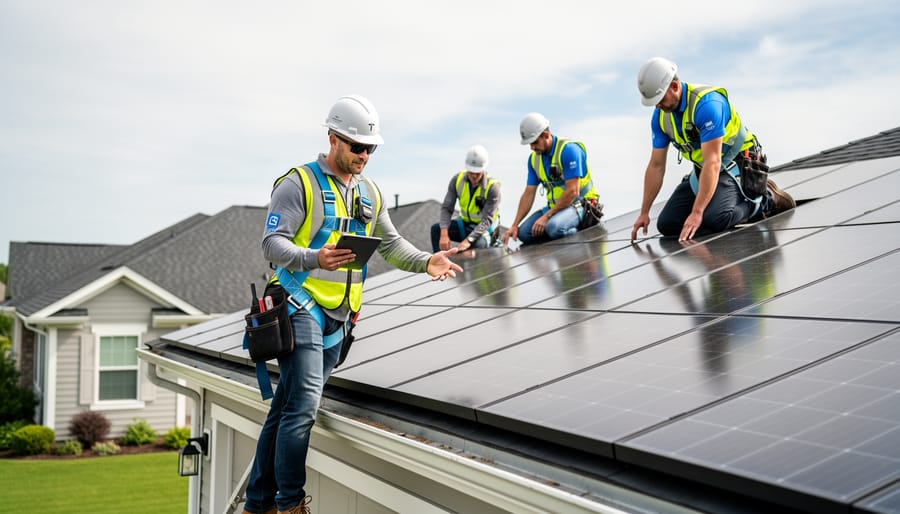
The federal residential solar tax credit expired on December 31, 2025. If you’re searching for this information in late 2026, here’s what you need to know right now: homeowners can no longer claim the 30% Residential Clean Energy Credit for new solar installations. However, if you completed your solar project before the deadline, you can still claim the credit when you file your 2025 or 2026 tax return.
This expiration represents a significant shift in solar financing. For years, the 30% federal credit helped millions of homeowners offset installation costs, often reducing a $20,000 system to an effective $14,000 after tax benefits. That incentive is now gone for residential properties.
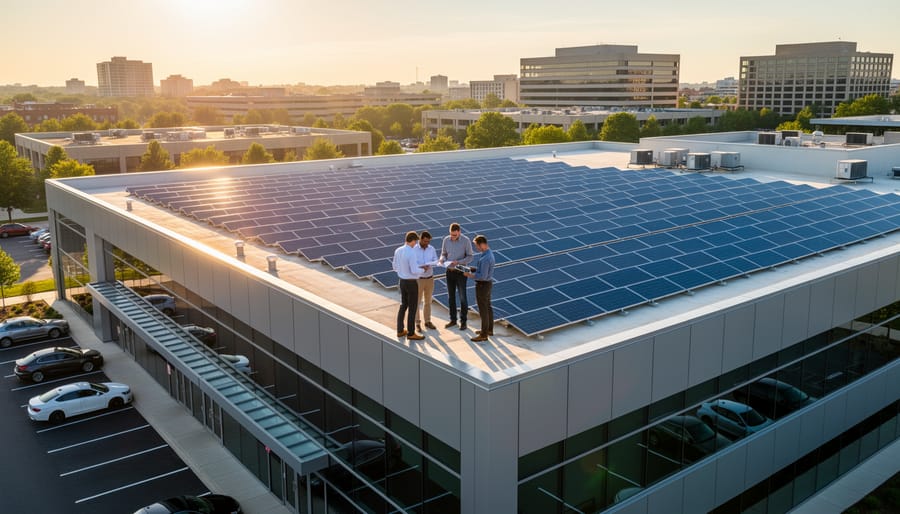
Commercial solar projects still have a window. Businesses can claim tax credits through December 31, 2027, but only if construction began before July 4, 2026. This narrow eligibility creates urgency for commercial property owners who’ve been considering solar.
The good news: if you installed solar in 2025, you haven’t missed out. The tax credit details still apply to your completed project. You’ll need to file IRS Form 5695 with your return to claim the full 30% credit on qualified expenses.
This article breaks down exactly what changed, who remains eligible, how to claim retroactively if you installed before expiration, and what alternatives exist now that the residential credit has sunset.
What Changed: The Residential Solar Tax Credit Expired
The federal solar landscape shifted significantly on December 31, 2025. The Residential Clean Energy Credit, formally known as Section 25D of the tax code, officially expired at year’s end. This credit had provided a generous 30% tax break for homeowners installing qualifying clean energy systems since 2022, making solar panels, battery storage, and other renewable upgrades substantially more affordable for millions of Americans.
The distinction between before-deadline and after-deadline projects comes down to when your system was “placed in service,” which means installed, operational, and ready to generate power. If your solar panels were up and running by December 31, 2025, you’re still entitled to claim the full 30% credit on your 2026 tax return. The expiration doesn’t erase credits already earned.
However, if you signed a contract in 2025 but didn’t complete installation until January 2026 or later, you won’t qualify for the residential credit. The IRS bases eligibility on the placed-in-service date, not contract signing or deposit dates. This creates a clear dividing line: systems generating power by year-end 2025 qualify, while everything after that deadline doesn’t.
For homeowners who met the deadline, nothing changes about your ability to claim the credit. For those who didn’t, the federal residential incentive is no longer an option.
Key Developments: Three Changes Affecting Solar Tax Credits in 2026

1. Residential Credit No Longer Available for New Projects
The residential solar tax credit is no longer an option for homeowners starting new projects in 2026. Any solar panel system or other qualifying clean energy equipment placed in service after December 31, 2025, cannot be claimed on your federal taxes.
“Placed in service” simply means the date when your solar system was installed and turned on, ready to generate power for your home. It’s not about when you signed a contract or made a deposit. The system must have been fully operational and producing electricity by the end of 2025 to qualify for the 30% credit.
This represents a significant shift for homeowners who delayed their solar projects or who are just now exploring solar energy. If your system went live on January 1, 2026, or any date after that, you’ve missed the federal residential credit window entirely. There’s no partial credit, no extension period, and no grandfather clause for projects that were started but not completed by the deadline.
2. Commercial Solar Credits Remain Active Through 2027
Commercial property owners have more time to take advantage of federal solar incentives. Unlike the residential credit that expired on December 31, 2025, commercial solar tax credits remain available through December 31, 2027. This extension applies to businesses, nonprofits, agricultural operations, and other commercial property types installing qualified solar energy systems.
The catch is timing. To qualify for commercial solar tax credits in 2026 and beyond, your project must begin construction before July 4, 2026. This construction-start deadline is critical because projects that break ground after July 4, 2026 will not qualify for federal tax credits, even if they are completed before the December 31, 2027 placed-in-service deadline.
To qualify for commercial solar tax credits, projects must meet these requirements:
- Construction must begin before July 4, 2026
- System must be placed in service by December 31, 2027
- Property must be used for commercial, industrial, agricultural, or nonprofit purposes
- Solar equipment must meet IRS standards for qualified clean energy property
Beginning construction means either starting physical work of a significant nature on the solar installation or meeting the safe harbor requirements by paying at least 5% of the total project cost before the July 4, 2026 deadline. Commercial property owners considering solar should start planning now to meet these construction-start requirements and preserve their eligibility for federal tax credits before this accelerated timeline closes.
3. Early Phase-Out for ITC and PTC Programs
Congress enacted an accelerated end for the Investment Tax Credit (ITC) and Production Tax Credit (PTC) programs affecting solar and wind projects beyond the residential credit expiration. These business-oriented credits now face a compressed qualification window.
To qualify for either the ITC or PTC, projects must meet at least one of two requirements: begin construction before July 5, 2026, or be placed in service before January 1, 2028. This timeline applies primarily to utility-scale solar, large commercial installations, and wind energy projects that use these specific tax credit programs.
The construction-start deadline arrives in less than nine months. Projects that break ground by July 4, 2026, have until the end of 2027 to come online. Miss that construction-start date, and the project must be fully operational before 2028 begins.
This matters most for large-scale developers and commercial entities managing multi-phase solar or wind installations. The compressed timeline creates pressure to finalize permits, secure equipment, and mobilize contractors quickly. Unlike the predictable phase-down schedule that existed previously, this early phase-out eliminates the gradual reduction many project planners counted on.
For businesses evaluating substantial solar investments, the July 2026 construction-start deadline is now the critical date. Projects starting later may face different, less favorable economics.
Why This Matters: Impact on Homeowners and Businesses
The expiration hits different groups at very different stages of their solar journey. For homeowners who completed installations by December 31, 2025, the 30% credit remains intact, they’ll claim it when filing 2026 taxes. For those who missed that deadline or are just starting to explore solar now, the economics shifted overnight. A $25,000 residential system that would have qualified for a $7,500 credit in 2025 now carries the full cost, fundamentally changing the payback period and return on investment calculations.
Commercial property owners operate under a different timeline. Because their credits extend through December 31, 2027, with construction-start eligibility through July 4, 2026, businesses have a narrow window to lock in federal incentives that residential buyers no longer have. This creates a distinct advantage for commercial solar projects and explains why business interest in solar may spike while residential installations slow.
The broader impact shows up in adoption patterns. Federal tax credits historically drove roughly 40% of residential solar decisions. Without that incentive, fewer homeowners will find solar financially viable in the near term, particularly in regions without strong state or utility programs. The shift pushes solar from mainstream consideration back toward early-adopter territory for residential markets, while commercial sectors race to start projects before their own July 2026 construction deadline passes.
If You Completed a Solar Project by December 31, 2025
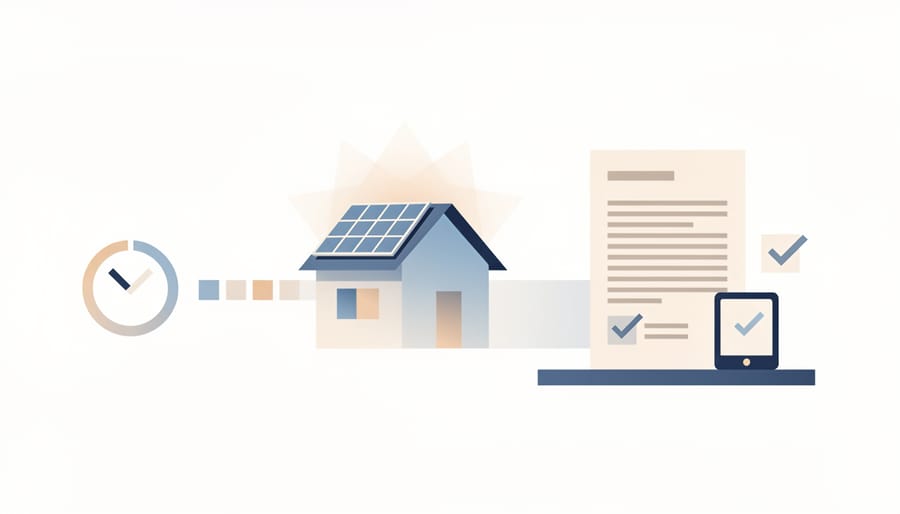
If your solar installation was complete and operational by December 31, 2025, you can still claim the 30% Residential Clean Energy Credit when you file your 2026 taxes. Here’s how to claim it successfully.
First, gather your documentation. You’ll need itemized invoices showing the total cost of equipment and installation, proof of payment (receipts, canceled checks, or credit card statements), and manufacturer certifications confirming your solar panels meet federal standards. If you included a battery storage system, verify it has at least 3 kilowatt-hours of capacity to qualify.
Complete IRS Form 5695, Residential Energy Credits, when you file your 2026 return. Part I of the form calculates your qualified solar expenses and applies the 30% credit rate. Enter the final credit amount on Schedule 3 (Form 1040), which transfers to your main tax return.
The credit directly reduces what you owe dollar-for-dollar. If you installed a $20,000 system, you’ll claim a $6,000 credit. You can carry forward any unused portion to future tax years if the credit exceeds your 2026 tax liability, so you won’t lose the benefit if you can’t use it all at once.
File by the standard tax deadline, typically April 15, 2027 for your 2026 return. You can file earlier if you prefer. Extensions for filing your return also extend the deadline to claim this credit.
Keep all documentation for at least three years after filing. The IRS may request proof that your system was placed in service before the December 31, 2025 deadline. Your final inspection date or utility permission-to-operate letter serves as the best evidence.
What to Watch: Options for Homeowners and Businesses in 2026
The federal residential credit has expired, but several alternatives can reduce solar costs in 2026. Start by checking your state and local incentive programs, many offer property tax exemptions, sales tax waivers, or direct rebates that significantly lower upfront expenses. States like California, New York, and Massachusetts maintain robust solar incentive programs independent of federal credits.
Contact your utility company about net metering programs and solar rebates. Many utilities pay per-watt rebates or offer time-of-use rates that maximize savings from solar production. Some municipal utilities and cooperatives provide special financing or performance-based incentives for residential solar installations.
If you’re considering solar now, explore zero-down solar loans and power purchase agreements (PPAs) that minimize initial costs. PACE financing programs, available in certain states, allow you to repay solar investments through property tax assessments. Compare panel types carefully, higher-efficiency options may cost more upfront but deliver better long-term value without federal credits offsetting the purchase price. Factor in solar maintenance costs when evaluating total ownership expenses.
Commercial property owners should prioritize projects immediately. You have until July 4, 2026 to begin construction on projects qualifying for commercial solar credits, which remain available through December 31, 2027. Any commercial solar project placed in service before that deadline can claim the credit, but starting construction before July 4, 2026 is essential. Business owners should secure quotes, finalize designs, and lock in contractors now to meet the construction-start requirement.
Database and state solar association websites list current incentives by location. Get multiple quotes from local installers who understand your area’s specific programs and can maximize available savings in this post-federal-credit environment.
Frequently Asked Questions About Solar Tax Credit Expiration
Can I still get a federal solar tax credit in 2026?
The residential solar tax credit expired on December 31, 2025, so homeowners cannot claim credits for new solar projects completed after that date. However, if you completed a qualifying solar installation by the deadline, you can still claim the 30% credit when you file your 2026 taxes.
What if I started my solar project before the deadline but didn’t finish?
Unfortunately, the residential credit requires that your system was placed in service by December 31, 2025. This means the equipment must have been installed and operational before the deadline. Projects that started earlier but weren’t completed by that date don’t qualify for the federal credit.
Do commercial solar credits work differently from residential credits?
Yes, commercial property owners still have access to solar tax credits through December 31, 2027, as long as their projects began construction before July 4, 2026. Commercial credits follow different rules and offer more flexibility than the expired residential program.
Are there any other solar incentives available now that the federal residential credit has expired?
Yes, many states offer their own solar incentives, property tax exemptions, and rebate programs that remain active. Local utility companies also provide solar rebates and net metering programs that can offset installation costs, though these vary significantly by location.
These are the most critical questions homeowners and businesses have right now. If you’re uncertain about your specific situation or live in an area with strong state-level incentives, connecting with a local solar provider through Ask Solar’s network can give you current information about programs available in your region and help you understand whether pursuing solar still makes financial sense without the federal residential credit.
The residential federal solar tax credit expired on December 31, 2025, ending a valuable 30% incentive for homeowners. If you completed a qualifying solar project before this deadline, you can still claim your credit when you file your 2026 taxes, don’t leave that money on the table. Commercial property owners have until December 31, 2027, to take advantage of their solar credits, with specific construction-start deadlines to meet in 2026.
While the residential credit has ended, solar remains a smart long-term investment. Many states, cities, and utilities offer their own incentives that can significantly reduce your costs. Ask Solar connects you with local solar providers who understand the current incentive landscape in your area. They’ll provide personalized quotes and help you navigate available rebates, financing options, and state-level programs that make solar affordable even without the federal residential credit.
Whether you’re claiming a credit from a completed project or exploring your options for 2026, we’re here to support your solar journey. Get connected with trusted local providers today.